From Sugarlandia to the world: The creation of Don Papa
Founded in 2011 by Stephen Carroll, a former manager at Rémy Cointreau, and co-founder Andrew John Garcia, Don Papa launched a premium rum from the heart of the Philippines for the first time in 2012. In the early 2000s, Carroll visited the island of Negros Occidental and encountered a fact there that would not let him go: although the Philippines has been growing sugar cane and distilling rum for centuries, the rum was never produced on Negros itself – the island that supplies the majority of the national sugar. He founded the Bleeding Heart Rum Company to change that and chose Bacolod as the starting point. The name Don Papa is a tribute to Dionisio Magbuelas, known as Papa Isio – initially a foreman on a sugar cane plantation, he became a key figure in the Philippine Revolution of the 1890s and helped liberate Negros from Spanish colonial rule in 1898. His story stands for the rebellious spirit that Carroll wanted to inscribe in every bottle. In 2023, Diageo acquired the brand for an initial sum of 260 million euros – a testament to the growth that Don Papa has achieved in just over a decade.
Black gold from the volcanic shadow: Cultivation, distillation, and maturation
Don Papa is produced at the foot of the active volcano Mount Kanlaon on Negros Occidental, at the Bago Distillery. The raw material is cara morada, an old, purple sugar cane variety with a high sucrose content that grows in the mineral-rich volcanic soils of the island. The molasses obtained – locally called "Black Gold" – undergoes a multi-day fermentation before being processed in stainless steel column stills with copper plates. Subsequently, the Master Distiller dilutes the distillate with spring water from Kanlaon before it goes into the barrels. Maturation takes place in ex-bourbon barrels made of American oak; the tropical climate of the Philippines significantly accelerates wood contact, so that seven years at Kanlaon correspond to a significantly longer maturation in cooler regions. The high Angel's Share – up to 12% per year – ensures the unusual concentration in the glass. For special bottlings, ex-Rioja, Fino, Palo Cortado, and Pedro Ximénez sherry barrels are additionally used, which serve the Master Blender as a further building block.
Don Papa is also committed to the preservation of the island of Negros: partnerships with the Talarak Foundation, which protects endangered animal species in the region, and the Philippine Reef & Rainforest Conservation Foundation, which preserves coral reefs and rainforests around the neighboring island of Danjugan, are an integral part of the brand philosophy.
Sensory profile and range: Vanilla, fruit, and cask finishes
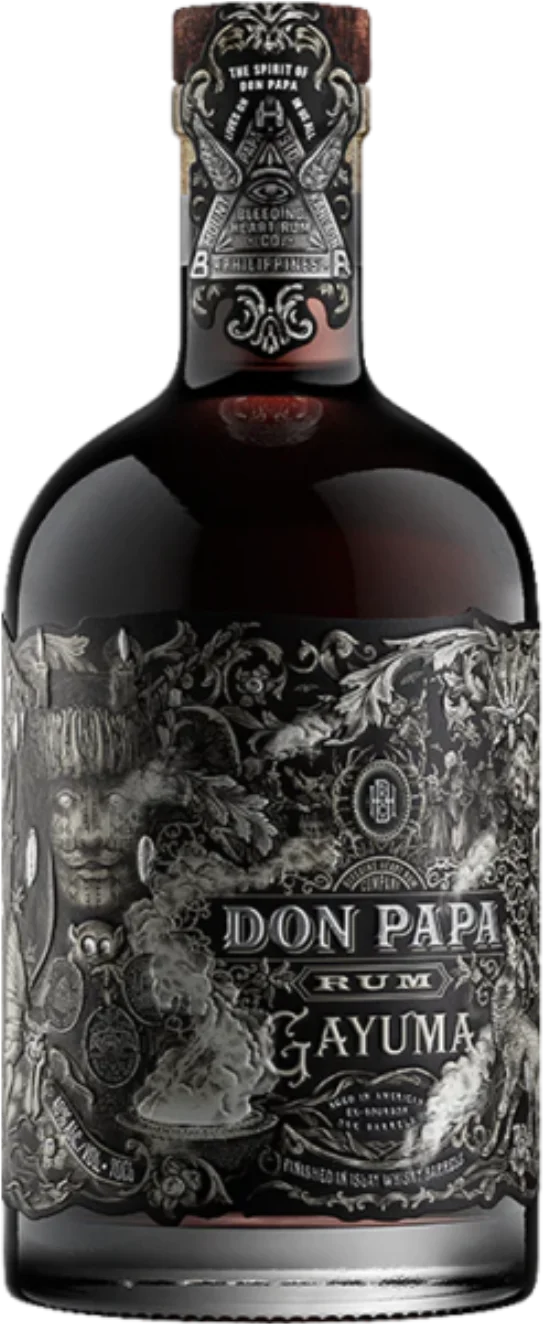
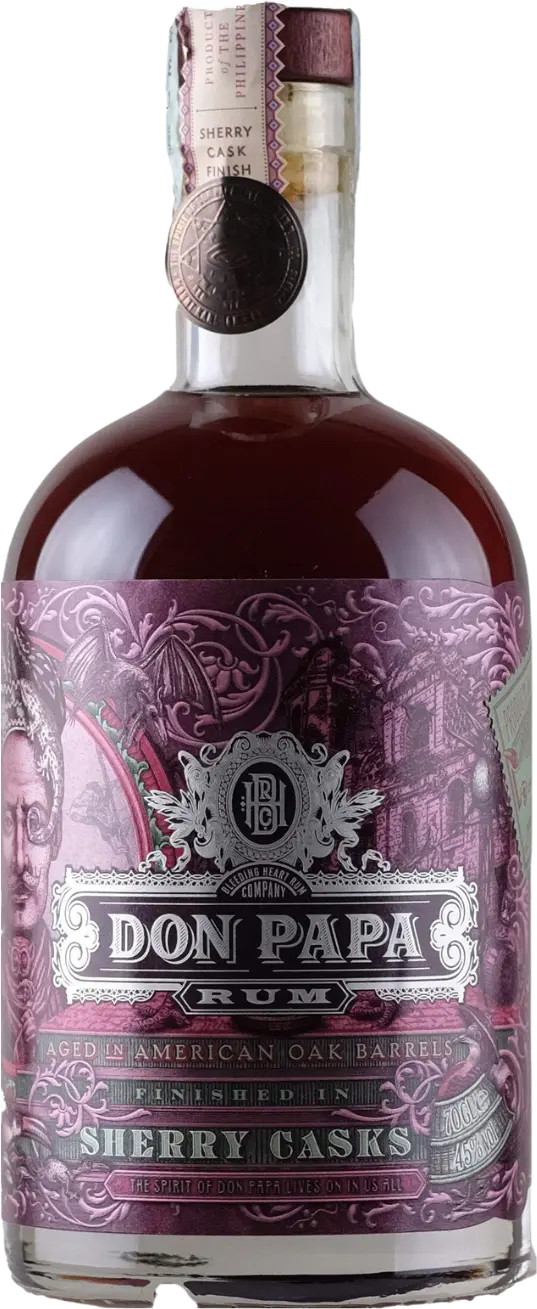
The core line matures for at least seven years in ex-bourbon American oak barrels and shows a round aroma profile of vanilla, honey, candied tropical fruit, and a hint of toasted oak on the finish. Those looking for less sweetness should reach for the Don Papa Gayuma: three years of ex-bourbon maturation, followed by a double finish in highly toasted ex-Rioja and Islay toasted oak barrels, results in a more complex, smoky-spicy note alongside the tropical fruit. The Don Papa Sherry Cask combines an ex-bourbon base with four different sherry cask types – Fino, Pedro Ximénez, Palo Cortado, and another – is bottled unfiltered at 45% ABV, and brings a dry, nutty nose alongside powerful dark fruit. The experimental edge of the range is marked by the Don Papa Alon, which carries an additional cask influence. Neat or on a single ice cube, the layers unfold most clearly; for cocktails, the more accessible variants of the main line are suitable as an aromatic base.