

Champagne · France
Champagne Ruinart
Read more Read less
Champagne Ruinart from Reims is the oldest Champagne house in the world – founded on September 1, 1729, less than three years after Louis XV's edict that made shipping bottled wine possible. Behind the house lies a family vision that traces back to Dom Thierry Ruinart, a Benedictine monk and confidant of Dom Pérignon, who brought the knowledge of sparkling wine production into the family. What distinguishes Ruinart to this day is an unwavering passion for Chardonnay: it shapes every single Champagne produced by the house, lending it the freshness, elegance, and mineral depth for which Ruinart is renowned worldwide. Since 1987, the house has been part of LVMH – and has consciously remained small and refined, producing around 150,000 cases annually.
Filters
10 products

Mondial du Rosé Or (Gold)
Awarded by Mondial du Rosé
Falstaff 2019 - 92 Punkte
Awarded by Falstaff
James Suckling - 93 Punkte
Awarded by James Suckling


Guide Hachette des Vins - 2 Sterne
Awarded by Guide Hachette des Vins
Mundus Vini - Gold
Awarded by Mundus Vini

Champagne & Sparkling Wine World Championships
Awarded by The Champagne & Sparkling Wine World Championships (CSWWC)
Mundus Vini - Gold
Awarded by Mundus Vini

Blanc de Blancs Prestige Champagne of the Year 2022
Awarded by TimAtkin.com
Champagne & Sparkling Wine World Championships 2024
Awarded by Champagne & Sparkling Wine World Championships
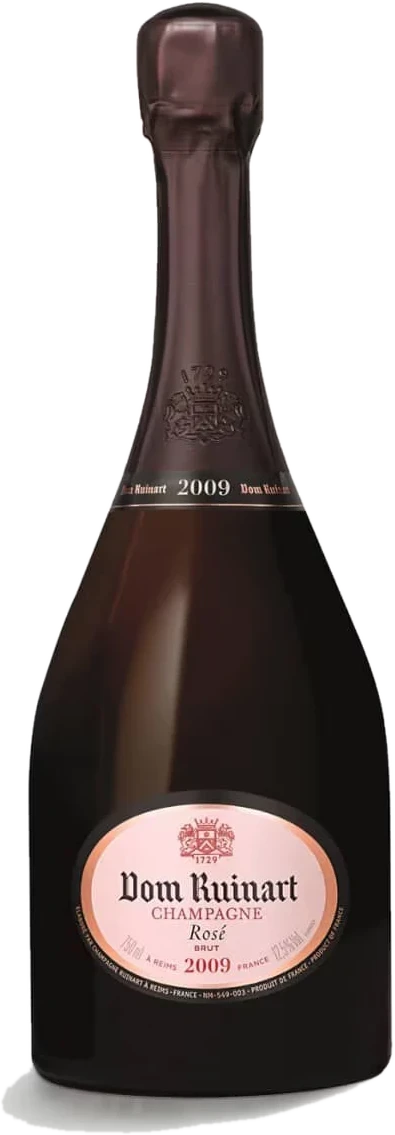
About Champagne Ruinart
From cloth merchant to the oldest Champagne house in the world
On September 1, 1729, Nicolas Ruinart entered the articles of association of a house that would change Champagne forever into his first account book. Ruinart is the oldest Champagne house in the world — founded less than fifteen months after Louis XV had permitted the shipping of wine in bottles for the first time with his edict of 1728. Without this decree, Champagne would have remained limited to its area of origin; Nicolas Ruinart immediately recognized the significance. The impetus came from his uncle, Dom Thierry Ruinart: the Benedictine monk and scholar, who lived in the Abbey of Saint-Germain-des-Prés near Paris and observed the nobility's enthusiasm for sparkling wine there, brought this knowledge to the family. Nicolas understood — and acted.
Initially, he gave away Champagne as a gift to the customers of his cloth trade. But by 1735, just six years after its founding, demand was so great that the house gave up the textile business entirely and devoted itself exclusively to Champagne production. In 1764, Ruinart was the first to ship a Rosé Champagne across Europe — a pioneering achievement that places the house well ahead of its later competitors Moët (1743) and Veuve Clicquot (1772). In 1817, the family was elevated to the nobility and henceforth called itself Ruinart de Brimont; the house remained in family hands for over two centuries. Since 1987, Ruinart has belonged to LVMH — and has consciously remained small and artisanal.
Chalk, cellars, and climate awareness: the house's working method
The foundation of Ruinart is literally made of chalk. In 1768, Claude Ruinart acquired ancient crayères under the city of Reims — Gallo-Roman limestone quarries that stretch for about eight kilometers and reach up to 38 meters underground. The constant temperature of 10 to 12 °C and the consistent humidity create ideal conditions for the second fermentation, the remuage, and long aging on the lees. In 1931, the crayères were classified as a French cultural monument; in 2015, they received international recognition as part of the UNESCO World Heritage site "Champagne Hillsides, Houses and Cellars". Cellar master Frédéric Panaïotis has recently reintroduced aging under cork — a conscious return to the house's historical craft.
In the vineyard, Ruinart has consistently focused on sustainability since the early 2000s. The use of fungicides and other inputs has since been reduced by 50%; herbicides and insecticides are no longer used. Since 2014, the house's vineyards have held the double certification "High Environmental Value" and "Sustainable Viticulture in Champagne". The vitiforestry project in the Sillery and Taissy sites — both historically linked to the house, Sillery as a Grand Cru already in early records — promotes biodiversity through hedges, trees, and the measurement of soil DNA. The "Second Skin" paper packaging, made from 99% paper, has replaced the classic cardboard box since 2020 and noticeably reduces the bottle's carbon footprint.
Chardonnay as the house style: freshness, chalk, long finish
What distinguishes Ruinart stylistically from almost all other large houses is its consistent commitment to a single grape variety. Every cuvée of the house is based on Chardonnay — which is why Ruinart is known in professional circles simply as "the Chardonnay house". The grapes come predominantly from the Montagne de Reims and the Côte des Blancs, both sites with the chalk-rich subsoil ideal for Chardonnay. Cellar master Panaïotis describes the intended style as the polar opposite of oxidative houses: fresh aromas, liveliness, purity, and radiance are the goal.
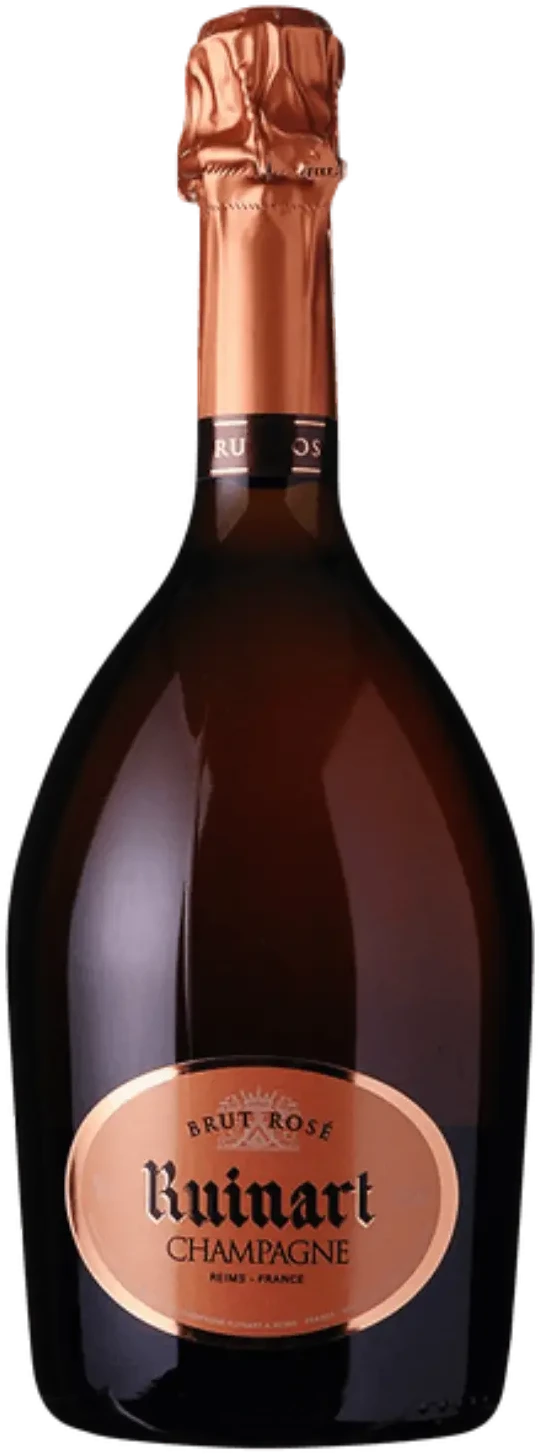
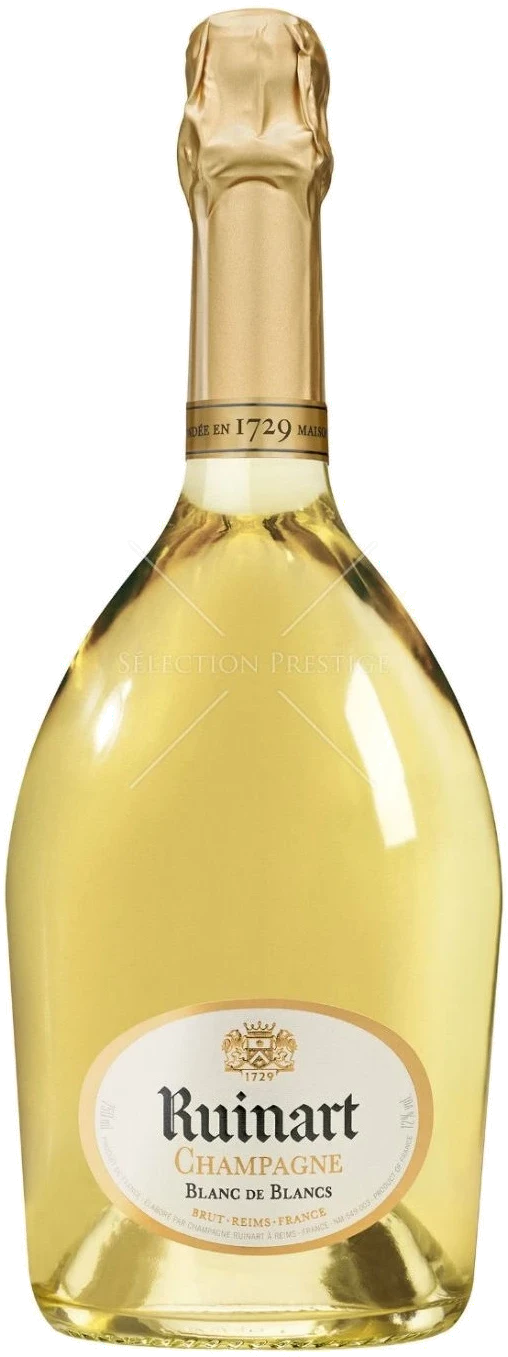
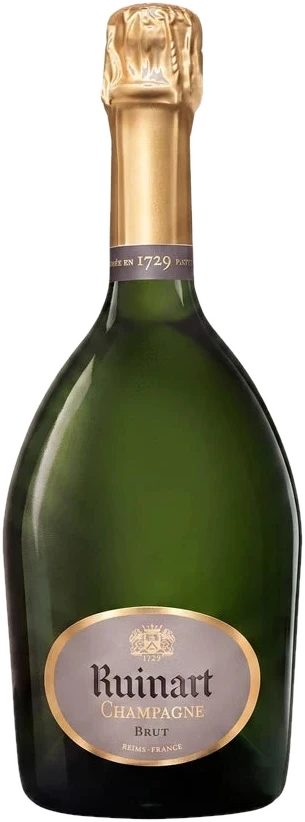
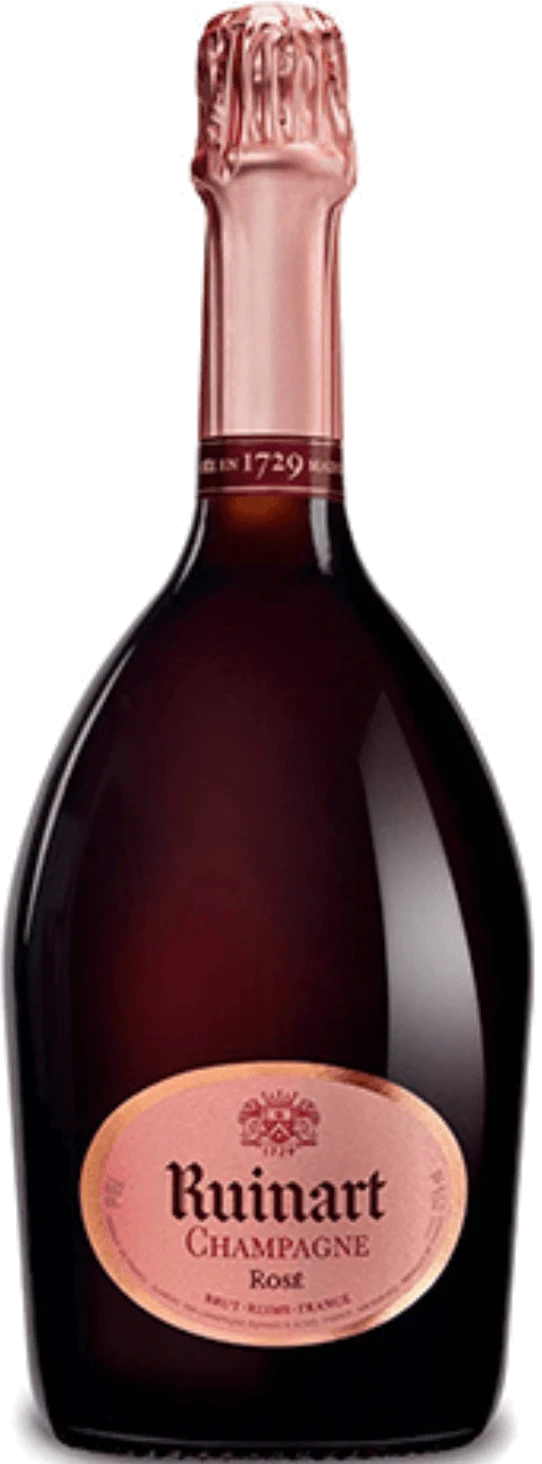
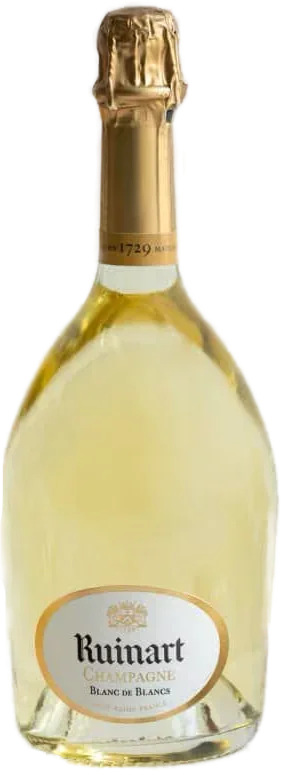
The range spans from the accessible R de Ruinart Brut — an assemblage with a Chardonnay base that matures on the lees for three years — to the clear, salty-mineral Ruinart Blanc de Blancs and the prestige cuvée Dom Ruinart Blanc de Blancs, vinified exclusively from Grand Cru Chardonnay and aged for over a decade in the crayères. The Rosé line, which dates back to a tradition from 1764, complements the range with depth and structure. All Champagnes are brut — Ruinart does not produce sweet cuvées. They pair well with: oysters, grilled turbot, goat cheese, light poultry dishes, and — with the Dom Ruinart — mature Comté or white truffles.
Epernayruinart.com
Award-winning wines
Mondial du Rosé Or (Gold)
Awarded by Mondial du Rosé
Falstaff 2019 - 92 Punkte
Awarded by Falstaff
James Suckling - 93 Punkte
Awarded by James Suckling
Guide Hachette des Vins - 2 Sterne
Awarded by Guide Hachette des Vins
Mundus Vini - Gold
Awarded by Mundus Vini
Champagne & Sparkling Wine World Championships
Awarded by The Champagne & Sparkling Wine World Championships (CSWWC)
Mundus Vini - Gold
Awarded by Mundus Vini
Blanc de Blancs Prestige Champagne of the Year 2022
Awarded by TimAtkin.com

Frequently asked questions
What distinguishes Ruinart from other large Champagne houses?
What is the difference between R de Ruinart and Blanc de Blancs?
What dishes does Ruinart Champagne pair with?
How long can I store Ruinart Champagne?
At what temperature should I serve Ruinart Champagne?
What does "Blanc de Blancs" mean for Champagne?
Champagne Ruinart –
Elegance and minerality since 1729
Champagne Ruinart was founded on September 1, 1729, in Reims – making it the oldest Champagne house in the world. The roots reach back to Dom Thierry Ruinart, a Benedictine monk and close confidant of Dom Pérignon, who brought the knowledge of sparkling wine into the family. Only a few months after the edict of Louis XV, which allowed the shipping of wine in bottles for the first time, Nicolas Ruinart seized this opportunity and laid the foundation for a house that has remained true to its original vision to this day.
What distinguishes Ruinart from other large houses is the consistent focus on Chardonnay. It is at the heart of every single Champagne – and brings that freshness, citrus notes, and mineral depth that make the house's style so clearly recognizable. Whether in the Blanc de Blancs or in the prestige cuvée Dom Ruinart: the signature remains the same – precise, lively, carried by a fine acid structure.
Ruinart has belonged to LVMH since 1987, but has deliberately maintained its restraint: with around 150,000 cases annually, it is one of the smallest houses in Champagne – a benchmark that puts quality before volume.