Cooperative of cooperatives: How Union Champagne was created in Avize in 1966
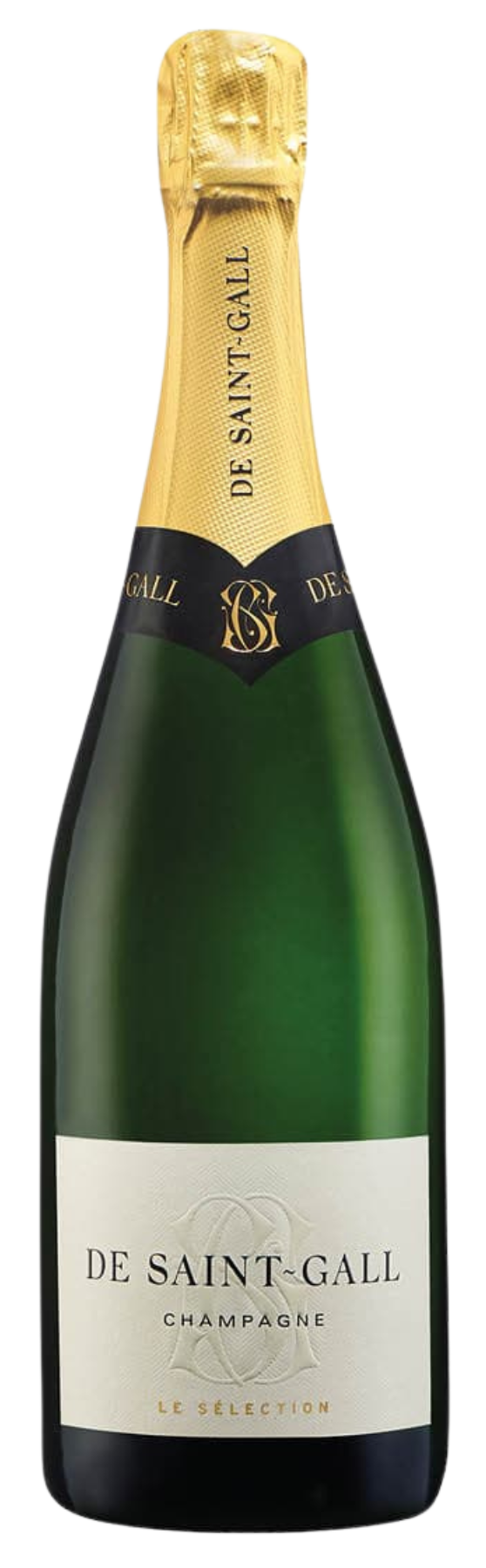
What flows into glasses today under the name Champagne de Saint Gall began in 1966 with a simple idea: winemakers from the best sites in Champagne join forces, pool their knowledge and their grapes — and thus bring forth something that no single operation could achieve. The result was the Union Champagne, founded in Avize in the heart of the Côte des Blancs, initially from the merger of six cooperatives. Since then, the network has grown continuously: today it comprises 15 cooperative cellars, over 2,000 winemakers, cellar masters, and oenologists, and more than 1,400 hectares of vineyard area — all classified as Premiers and Grands Crus without exception. Champagne de Saint Gall is the flagship of this collective work.
The history of the Union Champagne is deeply rooted in the generations that came before it: winegrowing families who have guarded their exceptional terroirs for decades, long before the cooperative existed. This accumulated knowledge, passed down from generation to generation, forms the foundation upon which every bottle of de Saint Gall stands.
Parcel by parcel: Craftsmanship and technology in dialogue
The heart of production is the cellar premises in Avize, inaugurated in 2013, which combine modern design with highly developed cellar technology. The decisive principle here: each of the 15 cooperatives ferments its grapes separately to preserve the peculiarities of each parcel and each village. Only then does the cellar master in Avize bring this diverse palette together into the cuvées that make up the unmistakable style of Champagne de Saint Gall. This principle — maximum terroir loyalty in the vineyard, precise assemblage in the cellar — is what distinguishes the house from a classic cooperative.
Around 90% of the vineyard area is accounted for by Premier Cru and Grand Cru villages, primarily along the Côte des Blancs and the Montagne de Reims — chalk soils where the roots penetrate deep into mineral-rich rock and bring exactly that precision and coolness into the wines for which de Saint Gall is known.
Chardonnay as a guideline: from Blanc de Blancs to the prestige cuvée Orpale
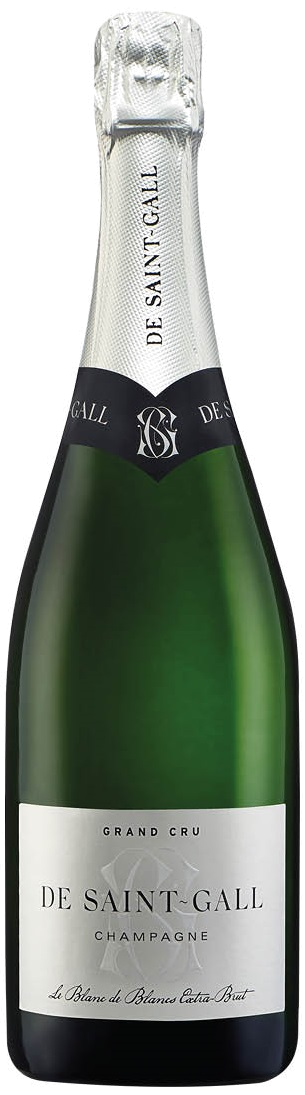
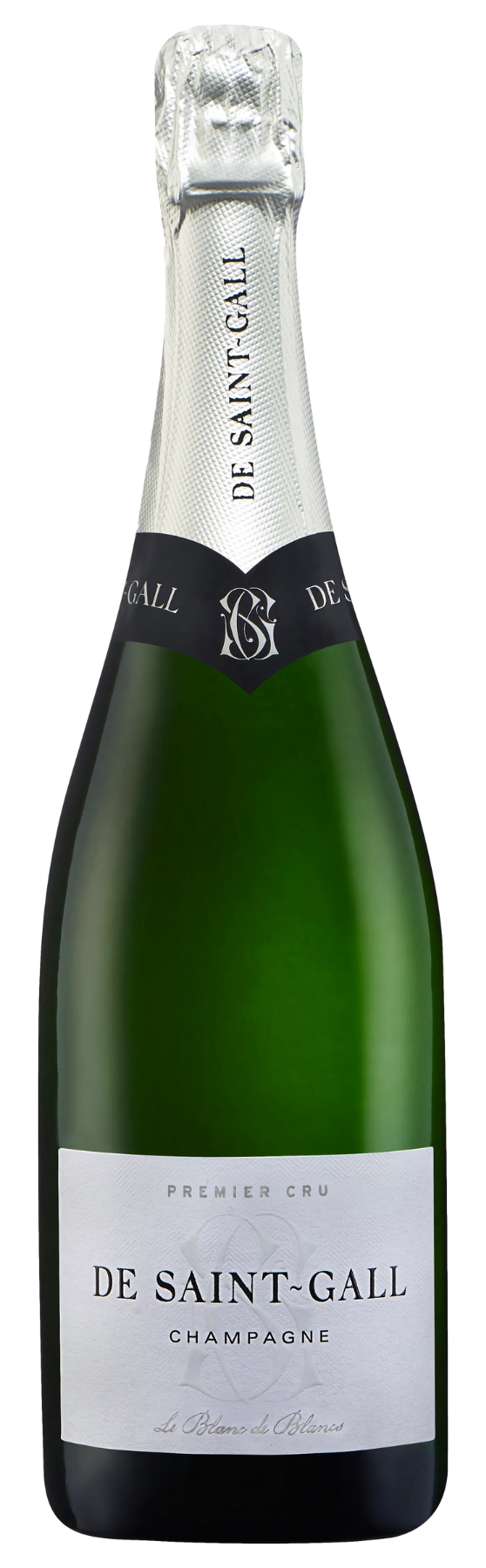
Chardonnay is the leading grape variety — you can feel that in the entire range. The Grand Cru terroirs around Avize, Cramant, Oger, and Le Mesnil-sur-Oger, all located in the core of the Côte des Blancs, give the Blanc de Blancs cuvées their characteristic combination of lively citrus fruit, fine minerality, and creamy structure. The Blanc de Blancs Grand Cru Extra Brut works with a minimal dosage between 0 and 6 g/l so that the Chardonnay and its place of origin can speak without restrictions. The Tradition Premier Cru — a cuvée of Chardonnay and Pinot Noir — brings fullness and texture into the glass with the Montagne de Reims components from Ambonnay and Bouzy.
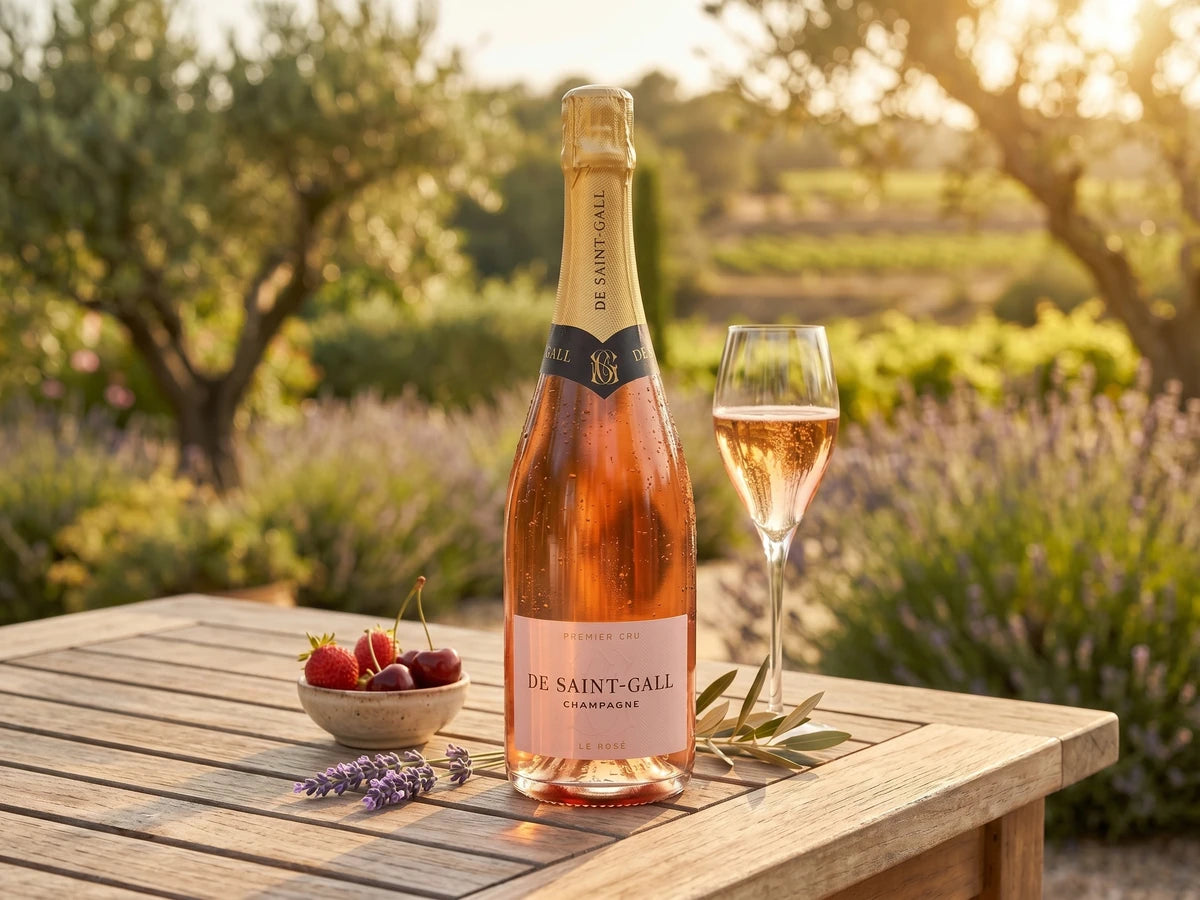
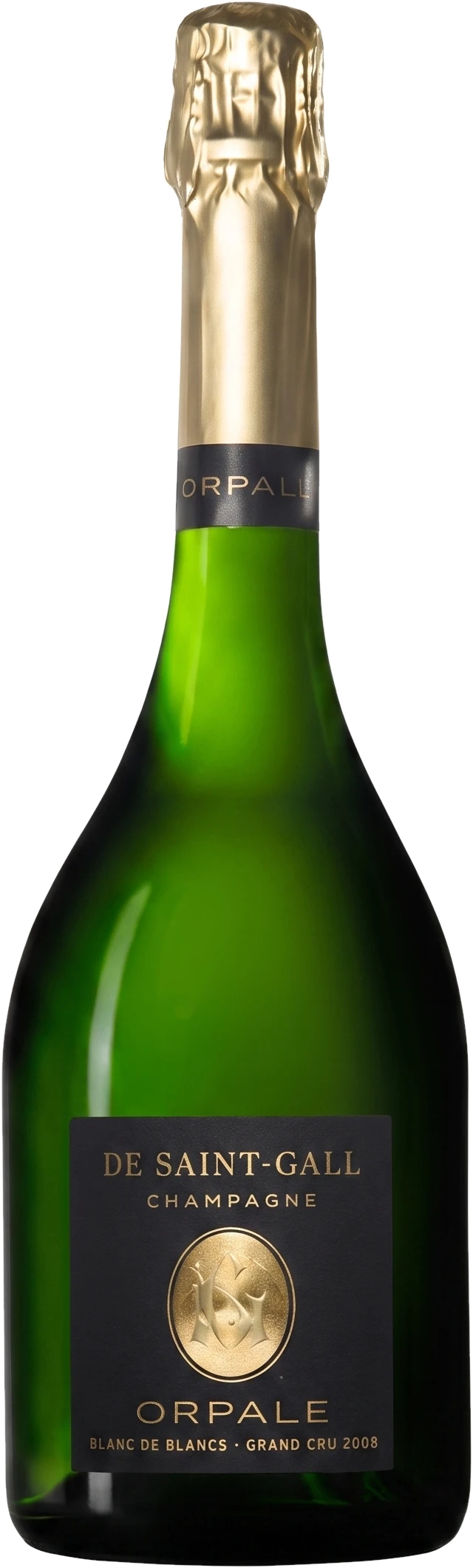
At the top is the Orpale, a Blanc de Blancs vintage cuvée made from 100% Chardonnay from Grand Cru sites: the prestige champagne of the house, which combines long lees aging with the depth of the best vintages. The range is complemented by a Rosé Premier Cru, whose grapes come from the Grand Cru village of Ambonnay on the Montagne de Reims and are processed using the Saignée method. What all cuvées have in common: a clear, elegant style that places terroir above opulence — champagnes that you appreciate at the table just as much as as an aperitif.