Four generations on the German-French border
Schweigen-Rechtenbach lies at the southernmost tip of the Southern Wine Route — and it is precisely here, where Germany and France share the vineyards, that the Bernhart winery is rooted. Since around 1900, the family has been cultivating vineyards on both sides of the border; what began as a small-scale farming sideline was shaped into an independent estate bottling wine in 1971 under Willi and Wilma Bernhart. Today, Sabine and Gerd Bernhart run the estate in the fourth generation, and with their son Marius, the fifth is already waiting in the wings. This continuity is not an end in itself: it explains why many of the best plots have been in family ownership for over a hundred years.
The historically grown curiosity of the estate is its terroir: about two-thirds of the vineyards are geographically located in Alsace — a consequence of the turbulent border history after 1870/71 and the Second World War, when the national border suddenly ran right through centuries-old vineyards. Thanks to a special German regulation, these vineyards are subject to German wine law and may be marketed as Palatinate wine. For Gerd Bernhart, this borderland existence is not a bureaucratic detail, but a lived identity: those who work across borders learn patience and openness — both of which can be tasted in the wines.
Ecological viticulture on limestone marl and clay marl
The winery has been operating entirely organically since 2012. Gerd Bernhart, a trained oenologist and VDP member since 2004, understands this as a consistent extension of an attitude, not as a marketing decision: species-rich greenery between the rows and a lively soil life are intended to maintain the natural balance in the vineyard. Strict selection and the latest possible harvest ensure the quality of the grape material — before it is gently brought into the cellar.
It is the soils that give the Bernhart wines their signature: limestone marl, clay marl, and limestone weathering soils shape the terroir around Schweigen. In the cellar, Gerd Bernhart works with modern technology without over-processing the wine. White wines ferment coolly, thus preserving freshness and purity; red wines mature in wooden barrels for up to 24 months after maceration. The estate's four VDP.GROSSE LAGEN — Kostert, Rädling, Sonnenberg, and Güldenwingert — as well as two Erste Lagen underscore how clearly the origin is at the center of focus.
Burgundy varieties with limestone-driven tension — and Riesling with depth
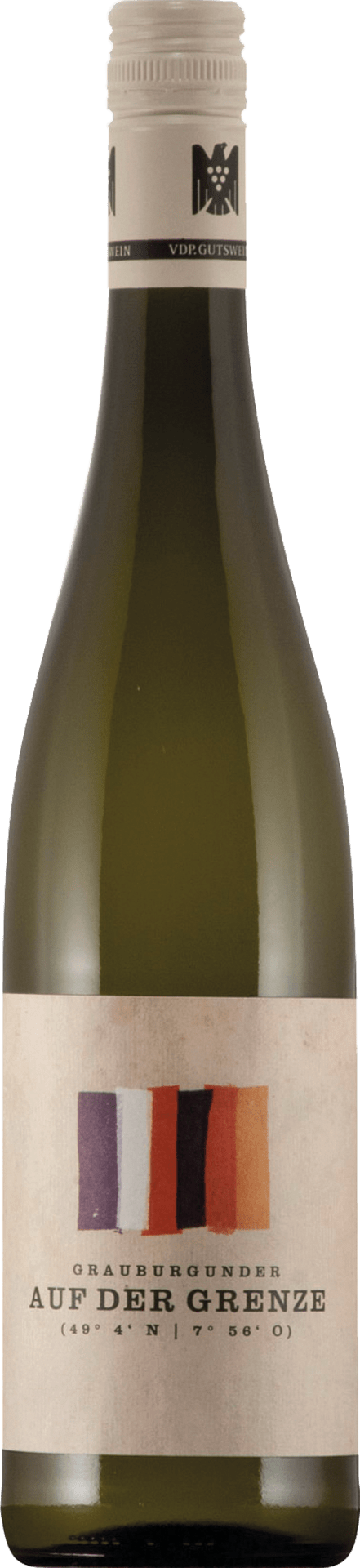
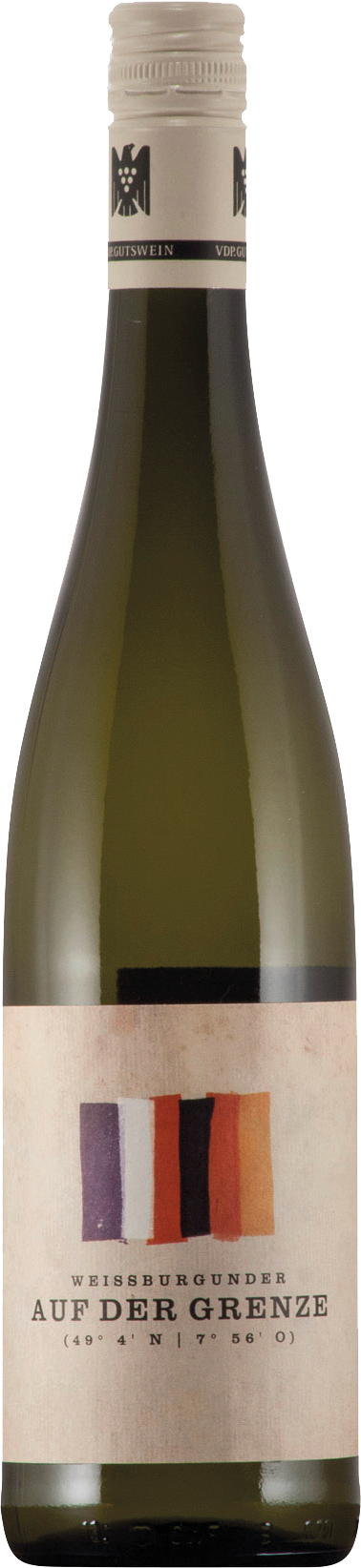
Schweigen is considered a Burgundy paradise in the Southern Palatinate, and Bernhart is one of its most convincing representatives. The assortment reflects this: Pinot Noir (around 30% of the vineyard area) forms the red backbone, while Pinot Blanc and Pinot Gris (together approx. 35%) shape the white lines. In addition, there are Riesling, Chardonnay, Auxerrois, Sauvignon Blanc, Merlot, and Cabernet Sauvignon. The style is unusually restrained for the Palatinate: less opulence, more focus, tension, and limestone-driven structure. White Bernhart wines appear fresh, lively, and mineral-spicy; the reds have an elegant tannin structure and a long finish. The entry-level assortment — including Pinot Gris and Pinot Blanc from the Auf der Grenze and Kalkmergel sites as well as the Auxerrois Tonmergel — makes the estate's philosophy directly accessible: soil and site in the glass, clear and without any fuss.