From espresso experiment to your own Pinotage line
Barista bears the signature of South African winemaker Bertus Fourie, who earned the nickname "Starbucks" in the industry for his ability to specifically bring out roasted and mocha aromas in Pinotage. In 2009, together with Vinimark, one of South Africa's largest independent wine marketers, he launched the first Barista Pinotage, establishing a distinct style within South Africa's flagship grape variety. The brand name is a nod to the Italian coffee master and refers directly to the roasted aroma that distinguishes the wine from classic Pinotage interpretations.
The grapes come from selected sites in the Western Cape, with a focus on the Paarl-Franschhoek Valley, where several sources locate production in the vicinity of the Val de Vie Estate. Barista does not operate its own winery with a visitor program: the brand focuses on oenological work and distribution through specialist retailers, not on on-site tastings.
Roasted aroma without additives: Craftsmanship instead of flavorings
The characteristic coffee and chocolate bouquet is not created by additives, but through three classic oenological levers: the harvest time of ripe grapes, the selection of specific yeast strains, and the targeted use of heavily toasted oak barrels. Fermentation takes place in a combination of stainless steel and concrete tanks, supplemented by gentle, daily pump-overs that carefully work out the color and tannin structure.
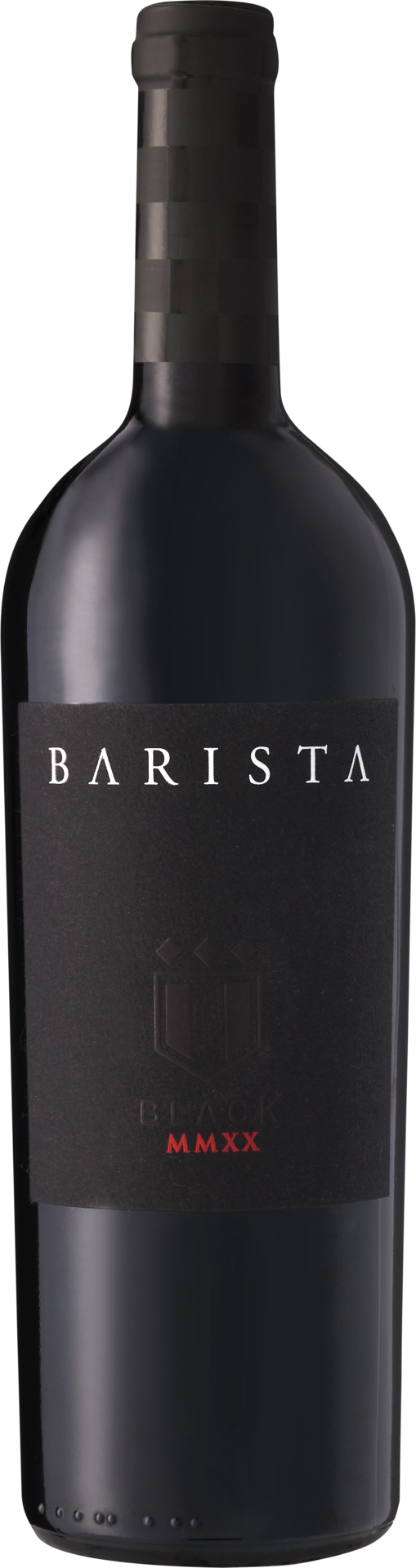
Barrel aging is staggered across the range: the basic Pinotage matures for around five months in selected oak, while the Barista Black line spends significantly longer in the barrel – up to 16 months, one-fifth of which in new French barriques. This graduated aging strategy makes it possible to keep both an accessible entry-level wine and a denser, more concentrated line in the program.
A Pinotage style to recognize
The Barista Pinotage shows mulberry, plum, and cocktail cherry, underpinned by vanilla and a clear mocha note, carried by soft, accessible tannins. Barista Black adds additional baking spices and more barrel notes: plum and mulberry meet velvety tannins, some barrel wood complexity, and a long, dry finish. The range is complemented by a Barista Chardonnay with noticeably citrus-accented fruit.
The wines are uncomplicated to handle and are suitable as a sociable red wine for sharing: the coffee-affine aroma goes surprisingly well with crispy pork belly with beetroot relish, roasted duck breast, or even dark chocolate. Served at 16–18 °C, the interplay of dark fruit and roasted aromas unfolds most clearly – a wine for everyone who wants to discover Pinotage beyond the traditional style.