From sheepfold to ketchup manufactory: The story of the Sauerborns
Boris Sauerborn is a trained lawyer. His wife Nina was a primary school teacher and Waldorf educator. What connects them is a passion for honest food — and a restaurant that started everything in 2010. In Ober-Bessingen near Lich in Hesse, the two took over the inn "Zum Heiligen Stein", named after a roughly 5,000-year-old Celtic megalithic tomb that towers over the village 800 meters from the house. The logo — a little sheep on the stone, designed by Boris Sauerborn's sister — tells of these beginnings: own flock of sheep, own bakehouse, herb garden, chicken mobile, beekeeping. Pestos, egg liqueur, and elderflower syrup were created for the guests long before the first ketchup ran into a jar.
The impetus was a lamb bratwurst. Served as currywurst, it delighted the guests — but not because of the sausage, but because of the curry sauce that came with it. The guests wanted to buy it. From 2017, the first retailers included the product in their range. Today, the ketchup is available at over 600 resellers in Germany, plus there is an own online shop. Nina Sauerborn actively joined the business in 2018 and has been responsible for accounting, social media, and shipping ever since. The family's three children help out in the warehouse and with labeling — the business has remained what it was from the beginning: a family project.
Craft instead of formula: raw materials, recipe, and a strict quality standard
The Sauerborns only reveal roughly what goes into the ketchup — the recipe remains a trade secret. What is known: 400 grams of tomatoes are processed for 100 grams of ketchup, exclusively sun-ripened fruits from Northern Italy. It is sweetened with unrefined cane sugar, which brings a light caramel note. Red wine vinegar with raspberry juice provides the acid structure. You will look in vain for flavor enhancers or thickeners — the high tomato content makes both superfluous. It is bottled in glass, not plastic. That was the program from the beginning: the product should fit the upscale gastronomy from which it originates.
In addition to ketchup, the manufactory produces fruit spreads on a small scale. For this, Boris Sauerborn has revived and significantly expanded an orchard with apples, quinces, vineyard peaches, and other varieties. The harvest fluctuates — production volume and availability depend on what nature provides. In addition, he keeps nine bee colonies. That sounds like a hobby, but it is a consistent continuation of a basic attitude: produce good ingredients yourself where possible.
Five varieties, five awards: the assortment at a glance
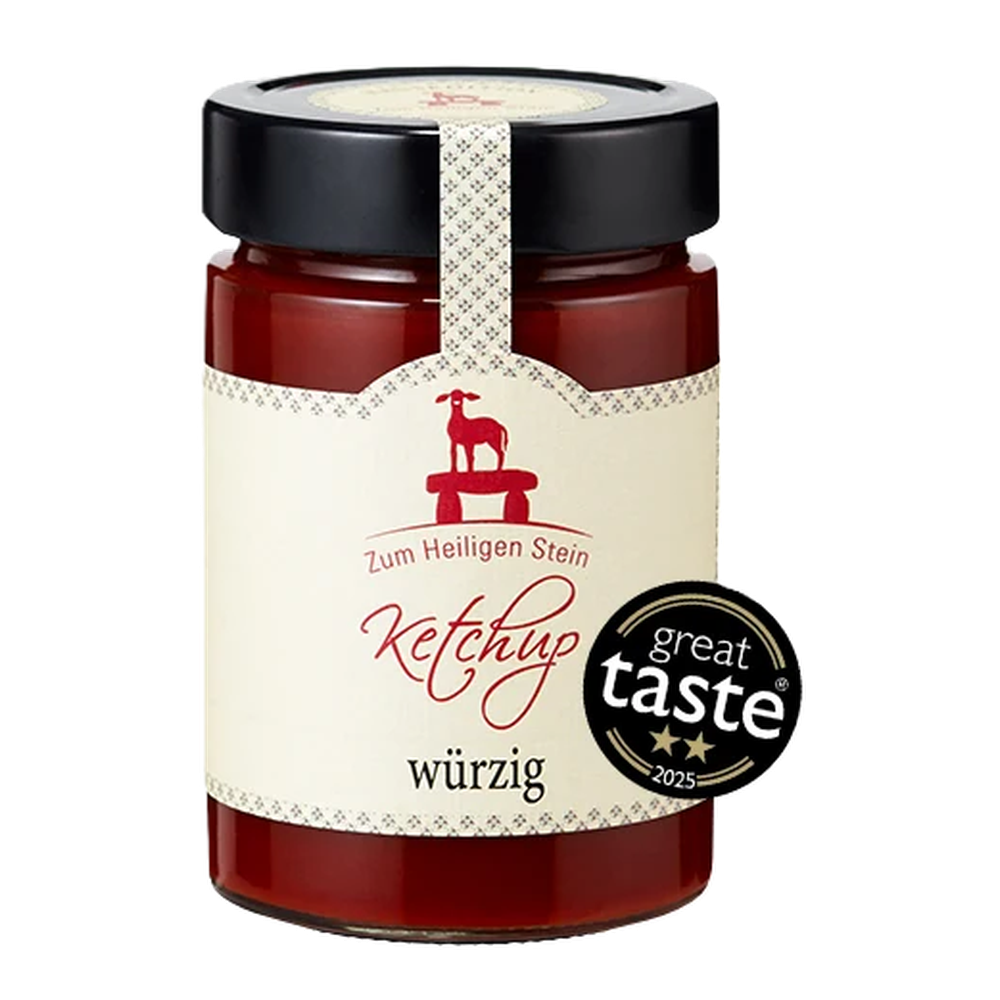
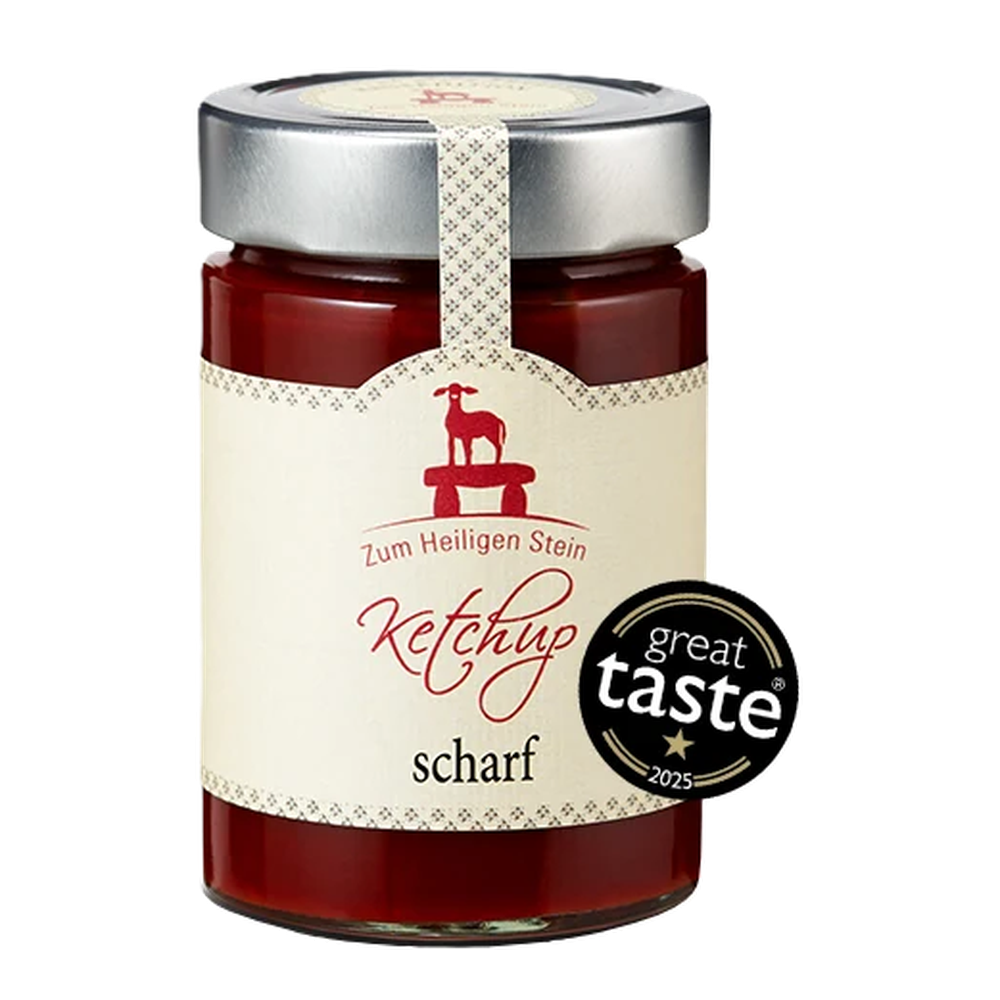
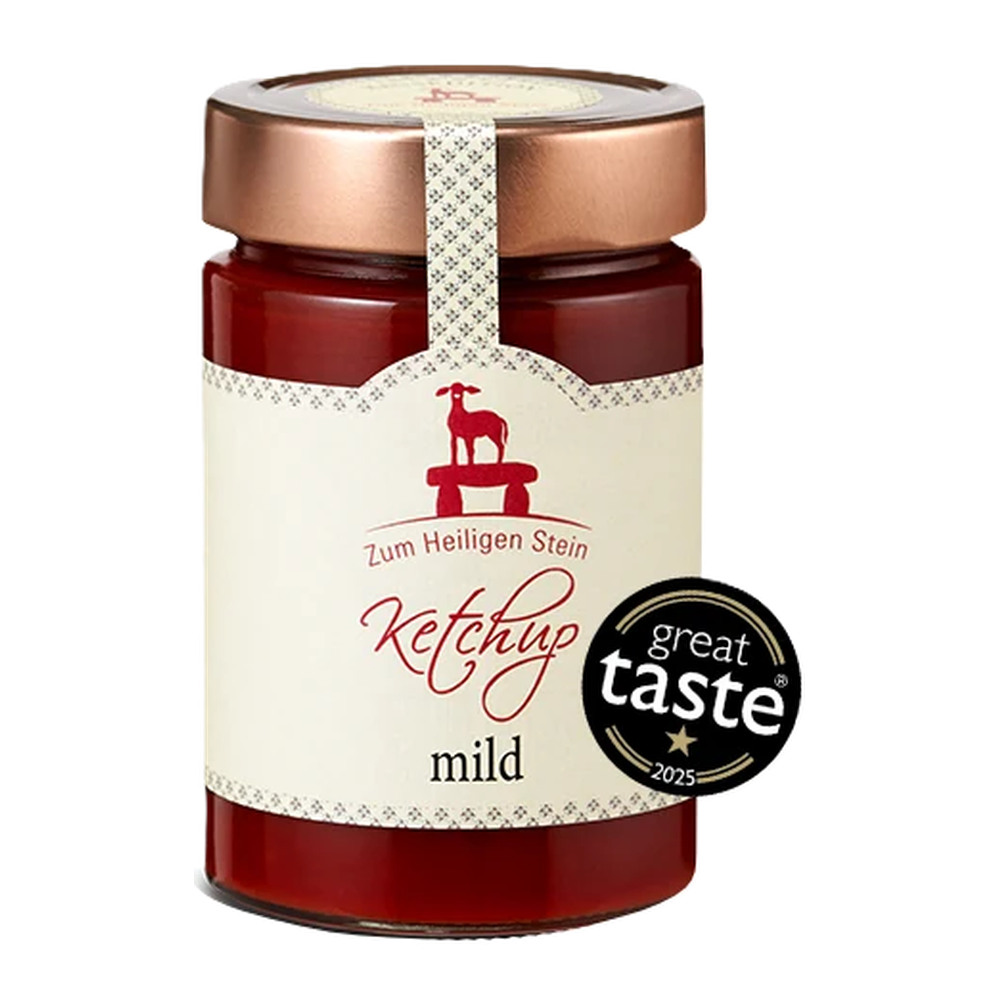
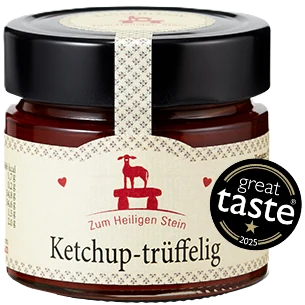
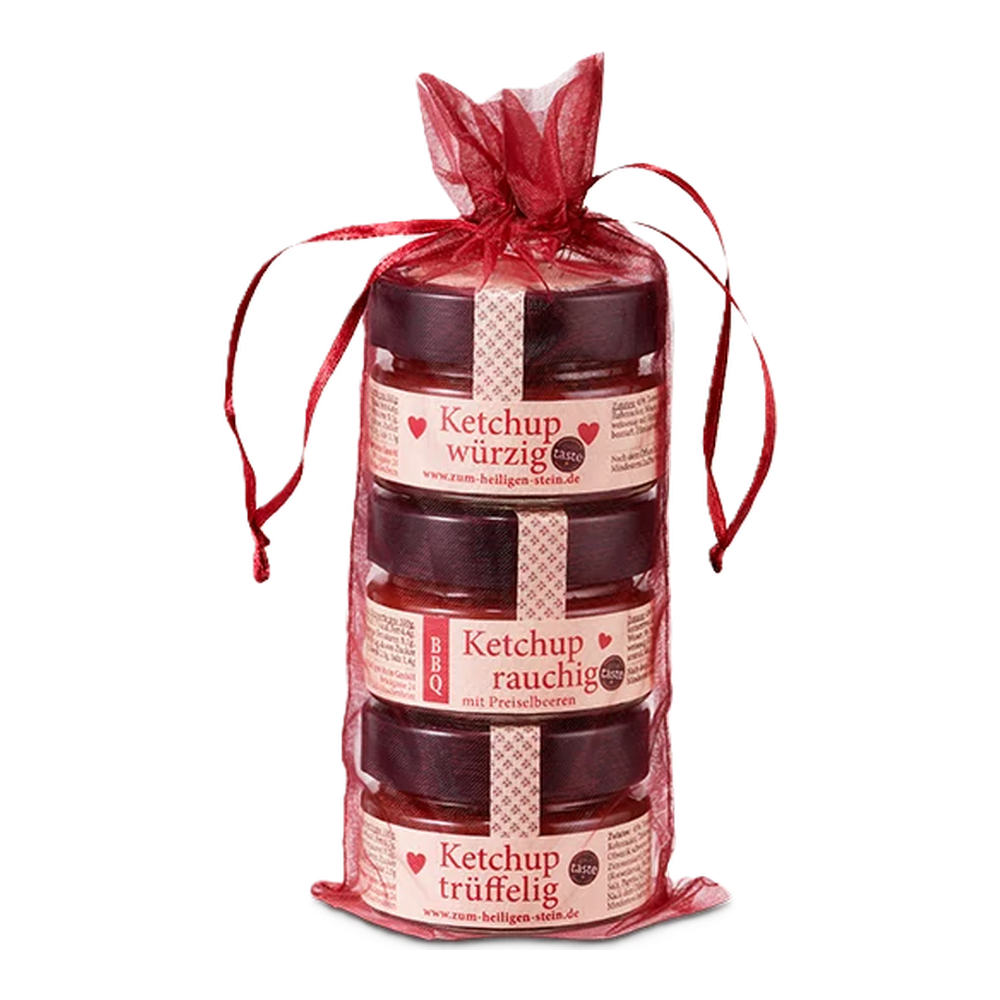
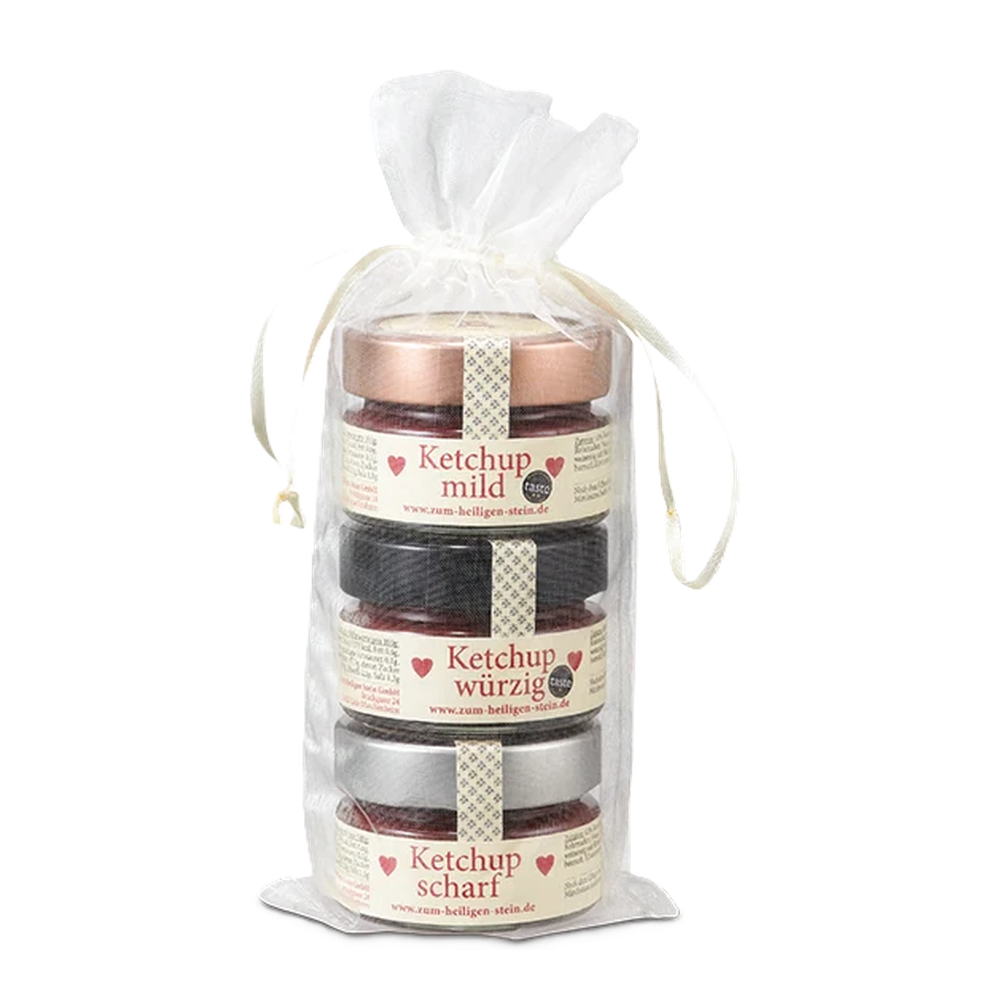
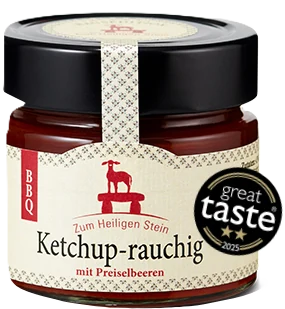
In the beginning, there was "Ketchup würzig" (spicy) — the basic recipe from the restaurant that brought the first guests to buy it. From customer requests, mild and scharf (hot) emerged as independent variants, later followed by rauchig (smoky) (with natural hickory smoke aroma and cranberries, developed as an answer to the barbecue evening) and trüffelig (truffled) (with a deliberately restrained truffle aroma, not a loud statement, but a fine accent). In 2025, all five varieties were awarded for the first time at the British Great Taste Award: "Würzig" and "Rauchig" each received two stars, "Mild", "Scharf", and "Trüffelig" each received one star. The fact that the children of the manufactory are particularly proud of these awards fits the history of the house: here you can taste what was created together.