From the Pisco Valley to a high-altitude winery: The Flaño family in Alcohuaz
The hamlet of Alcohuaz in the upper Elqui Valley was for a long time primarily one thing: a supplier of raw materials for Pisco, the pomace brandy that has divided Chileans and Peruvians for centuries. That wine of international caliber could be produced here was a bet against all conventions in 2005. Álvaro Flaño and his son Patricio took it anyway — based on the intuition that the nutrient-poor granite soils at an altitude of over 2,000 meters held the potential for extraordinary wines. With advice from ampelographer Eduardo Silva, they planted Syrah, Garnacha, Carignan, Malbec, Petit Verdot, and other Mediterranean varieties on slopes that no one had previously considered as fine wine sites. While viticulture had existed in the Alto Elqui for over a hundred years, Viñedos de Alcohuaz was the first winery to consistently turn it into quality wine.
From the beginning, the Flaños brought local knowledge into the house: Juan Luis Huerta and his wife Helia Rojas brought their knowledge of the northern Andean landscape. Marcelo Retamal joined as cellar master, known in the Chilean wine scene as one of its most experienced craftsmen — previously the mastermind behind De Martino and over 350 vineyard sites across the country.
Granite lagares, spontaneous fermentation, gravity: Consistently minimal intervention
The terroir of the Alto Elqui demands humility. At the 30th southern parallel, between 1,650 and 2,206 meters above sea level, a near-desert climate prevails: hardly any precipitation, intense UV radiation, and extreme temperature differences between day and night. The only source of water is the snowmelt from the surrounding Andean peaks, which seeps into the granite subsoil. These conditions produce berries with unusually thick skins — and that is exactly what shapes the style of the wines.
In the vineyard, work is done exclusively organically, without certification, but consistently from the start. In the cellar, the principle of place over process applies: every variety is hand-picked and foot-stomped in stone granite lagares — no pumping, no electricity. Fermentation takes place with natural yeasts. Subsequently, the must flows by gravity into concrete eggs, Stockinger foudres, or French oak containers. Interventions are reduced to the absolute minimum so that the character of the place is preserved in the glass.
Syrah, Garnacha, Mezcla Tinta: Mediterranean grape varieties on Andean granite soils
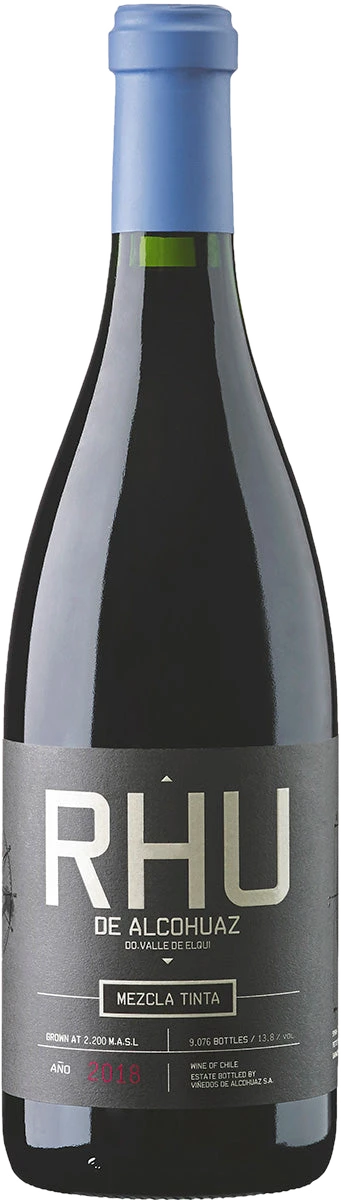
What Viñedos de Alcohuaz delivers in the glass is unmistakable: the wines have the tension and freshness that extreme altitudes impart to acidity, combined with the power that 300 days of sunshine a year concentrate in the berries. Syrah, Garnacha, and Carignan — on Carignan sites around 2,188 meters, the vines count among the highest plantings of this variety worldwide — show a completely different face here than in their southern European home regions: less weight, more mineral precision, and aromatic density without heaviness. The range extends from the cuvée wine RHU mezcla tinta — a blend centered around Syrah — to the single-varietal TOCOCO Syrah. Anyone looking to discover Mediterranean red wines anew will find here one of the most convincing answers to the question of what altitude viticulture really means.