Emil Underberg's idea: a Polish classic for the German market
Grasovka is a brand of the German spirits house Underberg. Emil Underberg invented the name in 1976 — he wanted to make the Polish Żubrówka tradition accessible to the German-speaking world and thus created an independent brand that relies on centuries-old craftsmanship. The idea of flavoring rye vodka with buffalo grass goes back a long way in Poland: as early as the 17th century, traders from the Białowieża Forest were selling this distillate nationwide. Grasovka is produced by the Polmos Białystok distillery, the largest vodka producer in Poland — it is then bottled in Germany. This German-Polish division of labor remains the foundation of the brand to this day.
Buffalo grass from the primeval forest: raw material and craftsmanship at the center
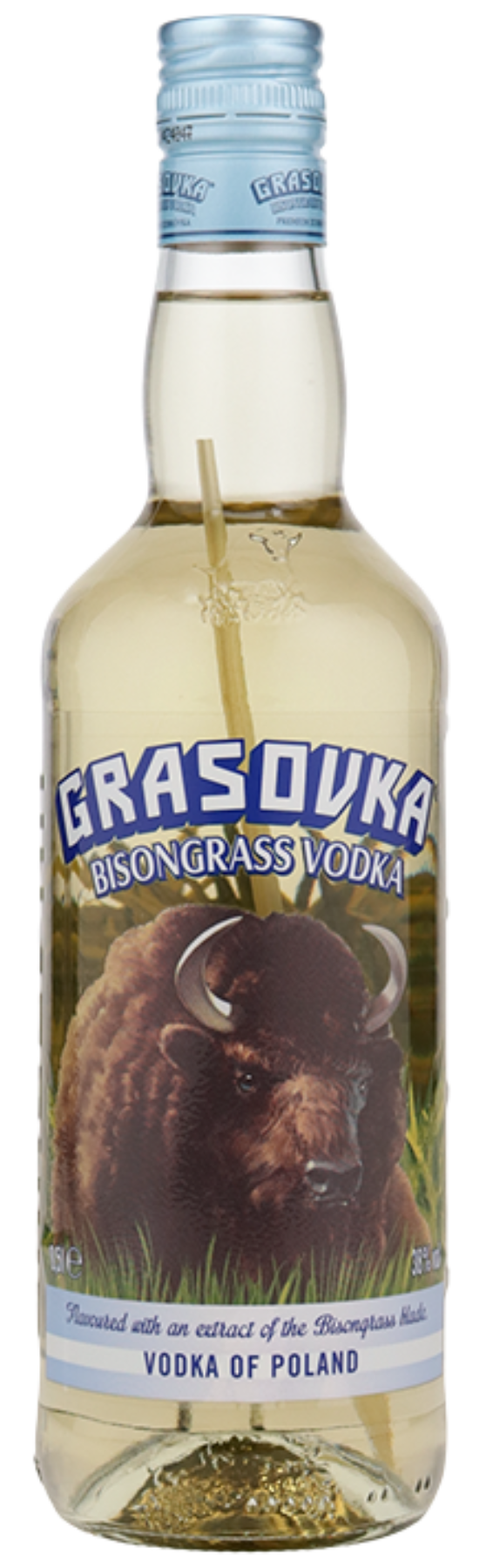
The grain base consists of 88 percent rye, ten percent triticale, and two percent wheat — plus water from a Polish lake. The grain is distilled and filtered multiple times. In parallel, the buffalo grass — botanically Hierochloe odorata, also known as sweet grass — is dried in trimmed bundles and then macerated in vodka. The resulting essence mixture is blended with the grain distillate according to a secret ratio. The result has a delicate greenish tint, which arises naturally from the grass and is preserved through the unique final filtration.
The buffalo grass itself grows in the forest clearings of the Białowieża National Park, one of the last primeval forests in Europe on the border between Poland and Belarus — the same protected area where the European bison, which give the grass its name, were reintroduced. During bottling in Germany, a single blade of grass is inserted into each bottle by hand: a visible sign of both the origin and the raw material.
Woodruff, rye, and a hint of grass: what happens in the glass
On the nose, Grasovka shows the typical coumarin profile of buffalo grass: woodruff, a slightly vanilla undertone, plus the grainy base of the rye. On the palate, the spice comes to the fore, while the distillate remains mild and round. At 38% ABV, it is somewhat lighter than many other vodkas — which makes it enjoyable neat on ice without losing any aromas. Served cold at 4–6 °C, it unfolds its fine herbal line most clearly. As a long drink, the combination with freshly pressed apple juice is arguably the best-known variant — the slightly sweet fruit works with the woodruff note without overpowering it. For those who prefer it more classic: a screwdriver with good orange juice works just as well. As of 2019, Grasovka was the best-selling flavored vodka and the best-selling Polish vodka in Germany — a market finding that describes the consistency of the concept.