From Michelin cuisine to its own beverage category
The story of Copenhagen Sparkling Tea Co. does not begin in a production hall, but at a dessert course for which no suitable wine could be found. Jacob Kocemba, an award-winning sommelier, was working in a Copenhagen Michelin restaurant at the time and faced a problem: despite a cellar with more than 1,700 wines, he could not find a convincing accompaniment for the final course. The solution came from the world of tea — a self-mixed extract of various tea varieties that immediately resonated with guests. From this moment, over hundreds of attempts, the concept was born that Jacob Kocemba would turn into a company years later.
In 2017, he teamed up with gastronomy expert Bo Sten Hansen, who brought many years of experience in corporate development. On May 26, 2017, the first bottle was sold in Copenhagen. Today, Copenhagen Sparkling Tea is available in over 50 countries and is on the menu in more than 100 Michelin restaurants worldwide.
Craftsmanship, precision, and a clear organic stance
What distinguishes Copenhagen Sparkling Tea Co. from industrial soft drink manufacturers is the consistently artisanal approach: every batch is brewed personally by founders Jacob Kocemba and Bo Sten Hansen. The exact steeping times and temperatures during production are the true heart of the process — because only the precise control of these parameters brings out the desired aromas without the need for alcohol or artificial flavor enhancers.
The entire range is organically certified. The teas used come from the best growing regions worldwide and are largely harvested by hand. Depending on the variety, up to 13 different types of tea are used per bottle — from fine white teas to Oolong and Darjeeling First Flush. This results in a complexity that is otherwise only found in carefully vinified sparkling wines.
Five characters, one claim: to be taken seriously at the table
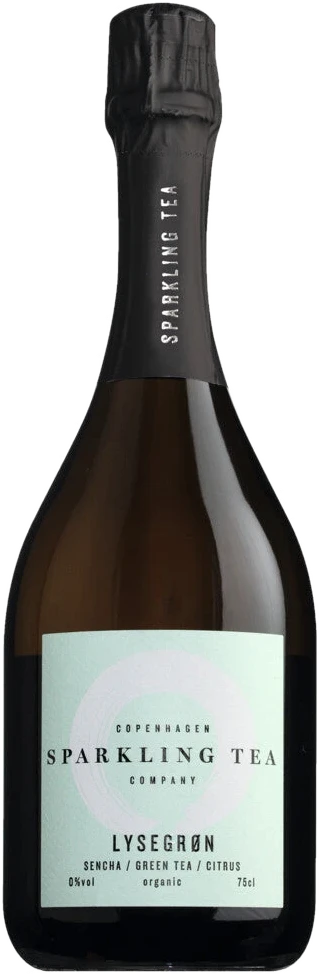
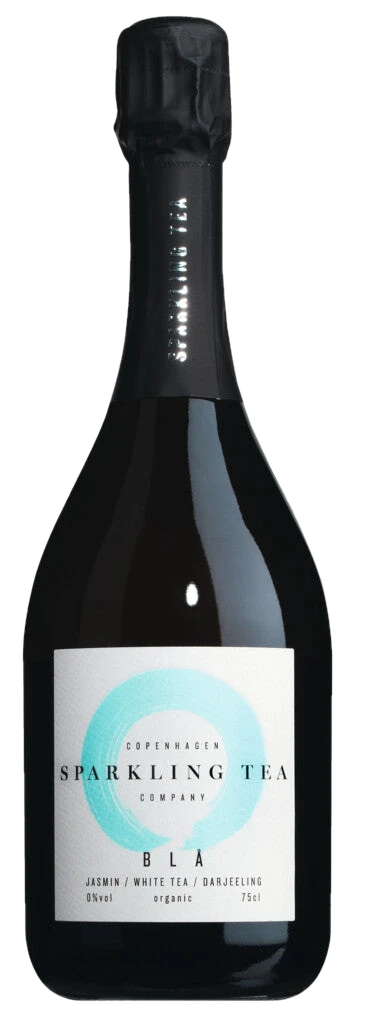
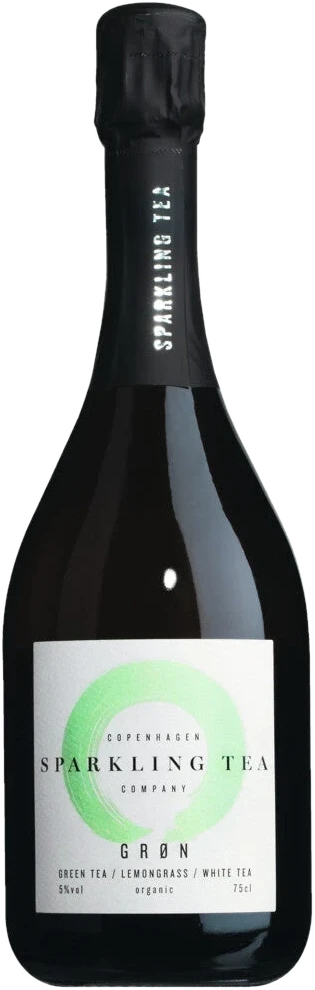
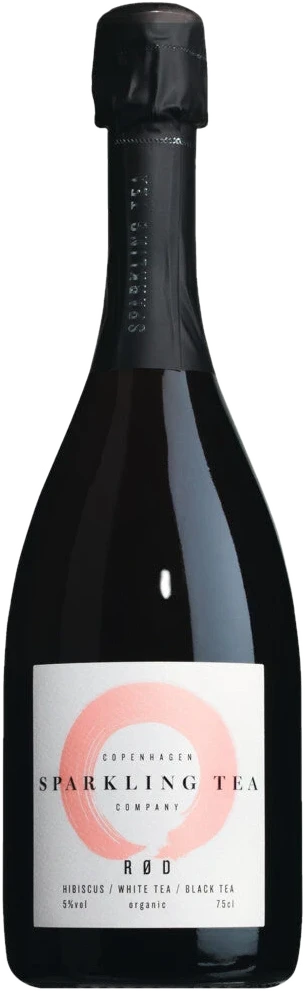
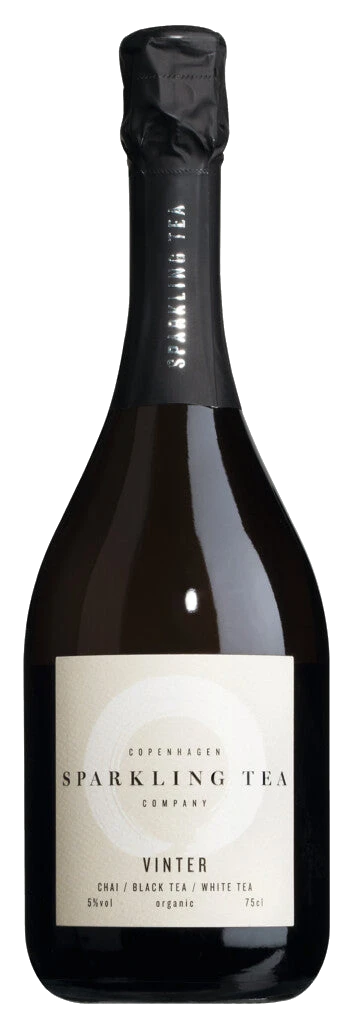
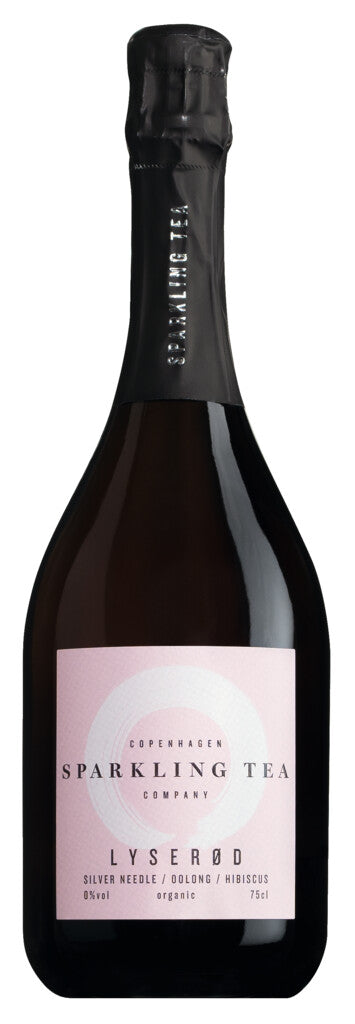
The range of Copenhagen Sparkling Tea Co. includes five independent cuvées — completely alcohol-free (0%) as well as with a light alcohol content (5%) — which are oriented visually and aromatically towards the color worlds of classic sparkling wines. BLÅ relies on nine tea varieties, including three white tea variants, jasmine, and chamomile, and impresses as an aperitif with a delicate, long-lasting acid structure. The pink LYSERØD works with Oolong, Silver Needle, and hibiscus — aromas of red berries, dry finish, good as an accompaniment to fish or light appetizers. GRØN brings green tea together with ginger and citrus notes and goes well with Asian cuisine and seafood. The alcoholic variants RØD and GRØN with alcohol are aimed at tables where a certain alcohol content is desired without giving up the complexity of the tea character.
What connects all variants: they are designed as serious table drinks — not as lemonade for non-drinkers, but as an independent category that brings food pairing, structure, and depth. Those who want to forgo alcohol at the table without giving up a thoughtful glass will find a consistent answer here from Copenhagen.