Seven centuries of wine history — from archbishop to Cru Classé
The roots of Château Pape Clément date back to 1252, when the estate in what is now Pessac brought in its first documented harvest under the name Domaine de la Mothe. In 1299, Gaillard de Goth acquired the estate at the request of his brother Bertrand, who had just been appointed Archbishop of Bordeaux. When Bertrand de Goth was elected Pope in 1305 and took the name Clement V, he gave the Domaine the name it still bears today. After his death in 1314, the estate remained in the possession of the Archdiocese of Bordeaux for centuries until it was confiscated and sold as national property during the French Revolution. In the 19th century, Pape Clément was at times considered the second-best address on the Left Bank after Haut-Brion. After eventful decades and the reconstruction by Paul Montagne starting in 1939 — with oenologist Émile Peynaud by his side — the official recognition as Grand Cru Classé de Graves followed in 1959. Since the early 1980s, Bordeaux entrepreneur Bernard Magrez has managed the Château and led it into the top tier of the appellation.
Parcel-based thinking meets drones and draft animals
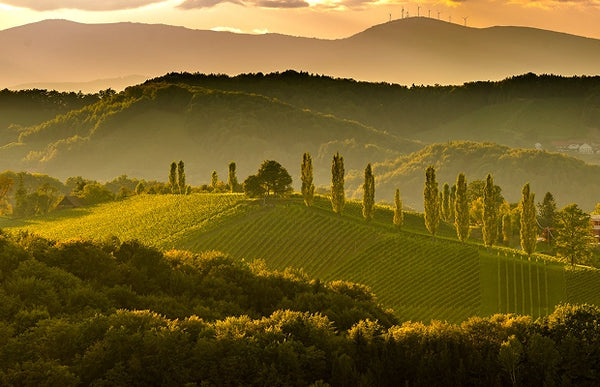
On around 60 hectares of vineyards — about 30 hectares of which are for the Grand Vin directly around the Château in Pessac — Cabernet Sauvignon, Merlot, Petit Verdot, and Cabernet Franc grow on a complex soil of gravel, clay, sand, and limestone. The eastern part of the vineyard is known for its deep clay deposits, where the Merlot takes root, while Cabernet Sauvignon stands on the gravel sections. Cultivation follows a parcel-specific approach: each plot is observed separately, selectively hand-harvested, and vinified individually — a principle the French call parcellisation. The estate holds Terra Vitis and HVE3 (High Environmental Value, third level) certification. Artificial fertilizers and chemical soil aeration are dispensed with in favor of animal traction; sheep graze the vineyards in winter. At the same time, since 2013, Pape Clément has been using solar-powered drones that record ripeness and plant health with parcel-level precision, helping to determine the exact start of the harvest.
In the cellar, vinification is gravity-fed: grapes are manually destemmed berry by berry, transferred via gravity into wooden vats of 30 to 70 hectoliters, and aged after cold maceration with regular pigeage. Malolactic fermentation takes place in barriques; the Grand Vin then matures for 18 months in French oak barrels. Michel Rolland acts as a consultant.
Structure and depth — red as well as white
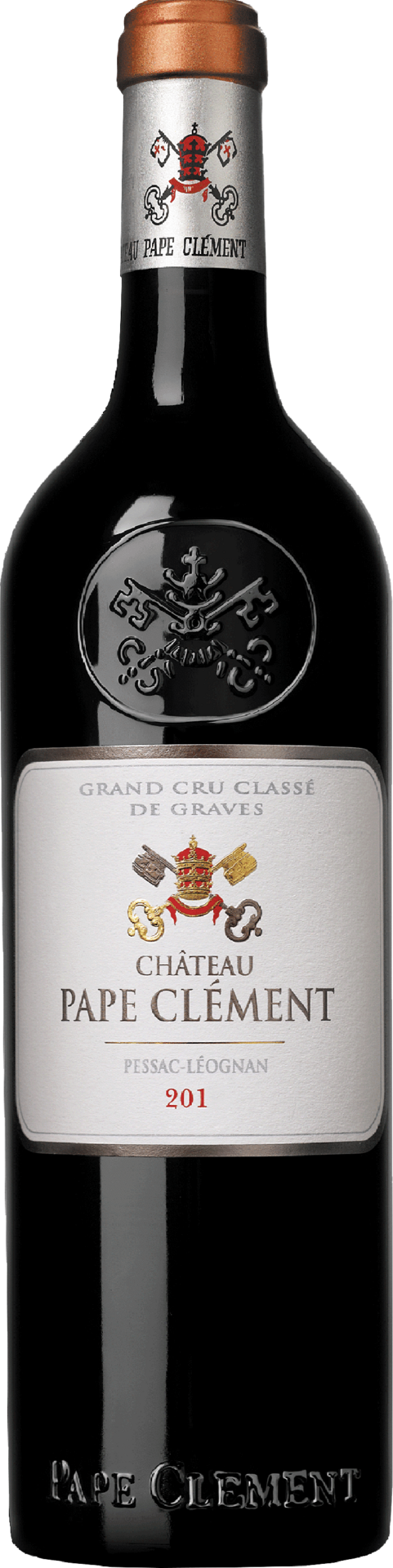
The red Grand Vin of Pape Clément — a cuvée based on Cabernet Sauvignon and Merlot — shows the classic signature of the Left Bank: dark fruit, cedar, tobacco, a resilient tannin structure, and a density owed to the cool microclimate of the location. Although the Château is located near the city limits of Bordeaux, it harvests later than many neighbors due to the peculiar temperature conditions — including the directly adjacent Haut-Brion. The dry white wines made from Sémillon, Sauvignon Blanc, Sauvignon Gris, and Muscadelle complement the range: rich, aromatically dense, and characterized by a freshness that makes them among the most distinctive blancs of the Pessac-Léognan appellation. Both colors reflect a philosophy that does not view tradition and technical precision as opposites, but as two sides of the same ambition.