Prato, 1858: The birth of the Biscotto di Prato
Antonio Giuseppe Baldassar Mattei was born in Prato in 1818 — the son of a baker and a seamstress, two crafts that had a tradition in the Tuscan textile city. In 1858, he opened his bakery on Via Ricasoli, in the middle of the historic center of Prato: initially for bread and pasta, but soon for what his name stands for today — the Biscotti di Prato, those twice-baked almond biscuits that have shaped the Tuscan confectionery tradition like hardly any other pastry. The recipe was so convincing that Mattei used it to win awards at exhibitions in Florence (1861), London (1862), and Paris (1867). The gastronomy critic Pellegrino Artusi described him as a "genius in his art, an honest and hardworking man".
After Mattei's death, the Pandolfini family took over the bakery — Ernesto Pandolfini, who had learned to read and write as a child next to the still-warm ovens, became the owner and laid the foundation for a family history that continues to this day. Today, the four siblings Francesco, Marcella, Elisabetta, and Letizia Pandolfini run the Biscottificio in the fourth generation — in the same rooms on Via Ricasoli, under the same name as the founder.
Craftsmanship without shortcuts: Fresh daily, for over 165 years
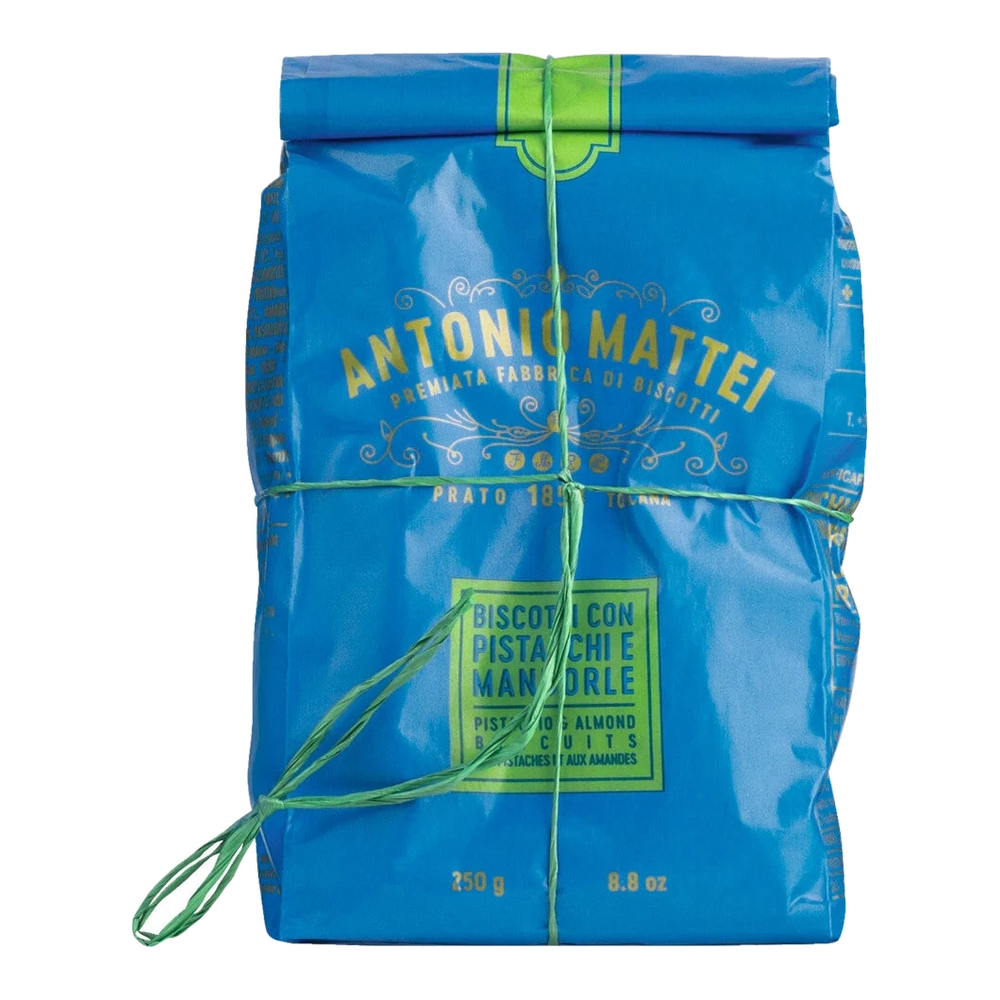
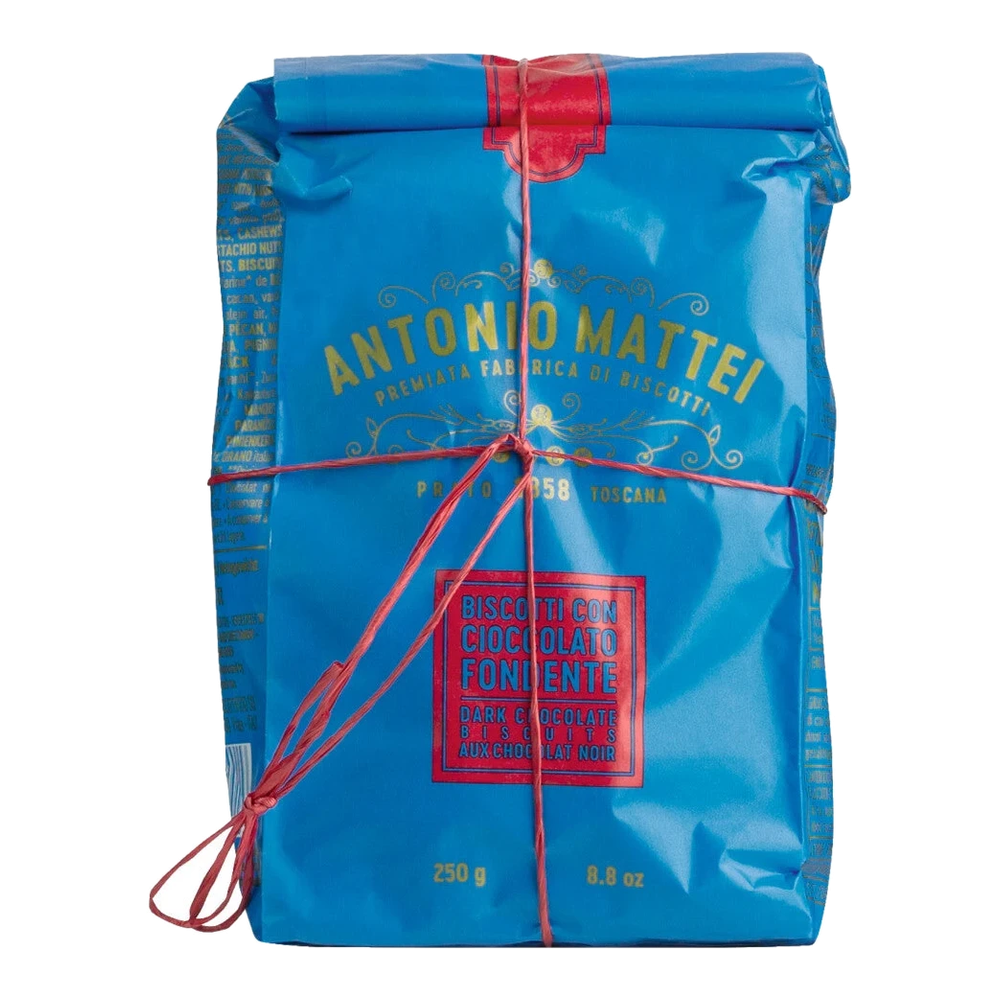
The house's philosophy can be broken down into one sentence: What worked in 1858 also works today. The dough for the Biscotti di Prato consists of five ingredients — flour, sugar, fresh eggs, almonds, and pine nuts. The recipe itself remains a family secret of the Pandolfinis to this day. The dough is shaped by hand, baked in the oven, and the loaves are cut into the characteristic, slanted slices while still hot — the shape that gives the biscotto its texture: firm on the outside, crunchy on the inside, ideal for a quick dip in Vin Santo or espresso. All products leave the bakery fresh daily, packed in the immediately recognizable blue Mattei bag, which is tied by hand with colored cord. In 2019, this specific shade — the so-called Blu Mattei — was registered as a trademark: a silent symbol of how seriously the Pandolfinis take their signature.
For the 160th anniversary in 2018, the four siblings opened a Museo Bottega on Via Porta Rossa in the historic center of Florence, which documents the history of the Biscottificio and offers tastings — a bridge between tradition and a new audience, without changing the production itself.
Classics and new variations: An overview of the range
The focus remains on the Biscotto di Prato with almonds — the benchmark against which all other cantucci are measured. Alongside this, the bakery has carefully expanded the range: the Biscotti con Pistacchi e Mandorle combine the classic dough base with pistachios and almonds — nutty, aromatic, with the same crunchy double-baking. The Cantuccini al Cioccolato Fondente replace some of the almonds with dark chocolate and give the familiar pastry a bitter, cocoa-toned depth. Both variations follow the same artisanal principles as the original: no industrial additives, daily production, packaging by hand. Beyond the cantucci family, the laboratory also bakes the Mantovana — a cake whose recipe, according to legend, reached Mattei in the 19th century as a gift from two nuns from Mantua — as well as toasted brioche slices and Brutti ma Buoni. Classic with Vin Santo, but also pure with coffee or broken over vanilla ice cream.