Nobility Meets Franciacorta: The Antinori Family and the Counts Maggi in Calino
The history of Tenuta Montenisa is twofold: that of the soil and that of the family. The hamlet of Calino near Cazzago San Martino, located south of Lake Iseo, can be traced back to the year 1158, when the Bishopric of Brescia handed the estate over to a local noble family. At the end of the 19th century, the estate came into the possession of the Maggi count family through the marriage of Lavinia Calini to Gaetano Maggi, a noble dynasty rooted in the Brescia region for centuries. Among the descendants of the family, Count Aymo Maggi is known as the founder of the legendary Mille Miglia automobile race. Villa Maggi and the surrounding vineyards have remained in the family's possession ever since.
In 1999, the traditional Tuscan house Marchesi Antinori decided to invest in Tenuta Montenisa — in search of the ideal terrain for a great Italian sparkling wine made according to the Méthode Traditionnelle. The partnership of two noble houses with deep roots in Italian wine history was born. Antinori brought decades of oenological experience; the Counts Maggi brought the terroir, the historic villa, and established vineyards that are hard to find anywhere else in Franciacorta.
Moraine Soils, Hillside Location, and Classic Cellar Tradition in Calino
The vineyards of Tenuta Montenisa extend over 60 hectares in the heart of the Franciacorta denomination, between Brescia and the southern shore of Lake Iseo. The climate is regulated by the lake — breezes ensure slow, even grape ripening. The soils are morainic, deep, and mineral, created by the glacial formation of the entire region. The vineyards on the hill of Santo Stefano are among the oldest and most renowned sites of the estate; they provide grapes with distinct aromatic depth and natural acidity structure.
In the vineyard, low yields are deliberately chosen; the grapes are harvested slightly before full ripeness to maintain freshness and fruit concentration. In the cellar, vinification follows the classic bottle fermentation process: the first alcoholic fermentation takes place in stainless steel tanks, the second fermentation occurs in the bottle. The wines then age on the lees — at least 24 months for the Blanc de Blancs, and significantly longer for the Riserva Contessa Maggi. The historic cellars of the estate, where the bottles traditionally rest, are not mere decoration but a work-relevant part of the aging process.
Classics and Millesimi: The Assortment of Chardonnay, Pinot Nero, and Pinot Bianco
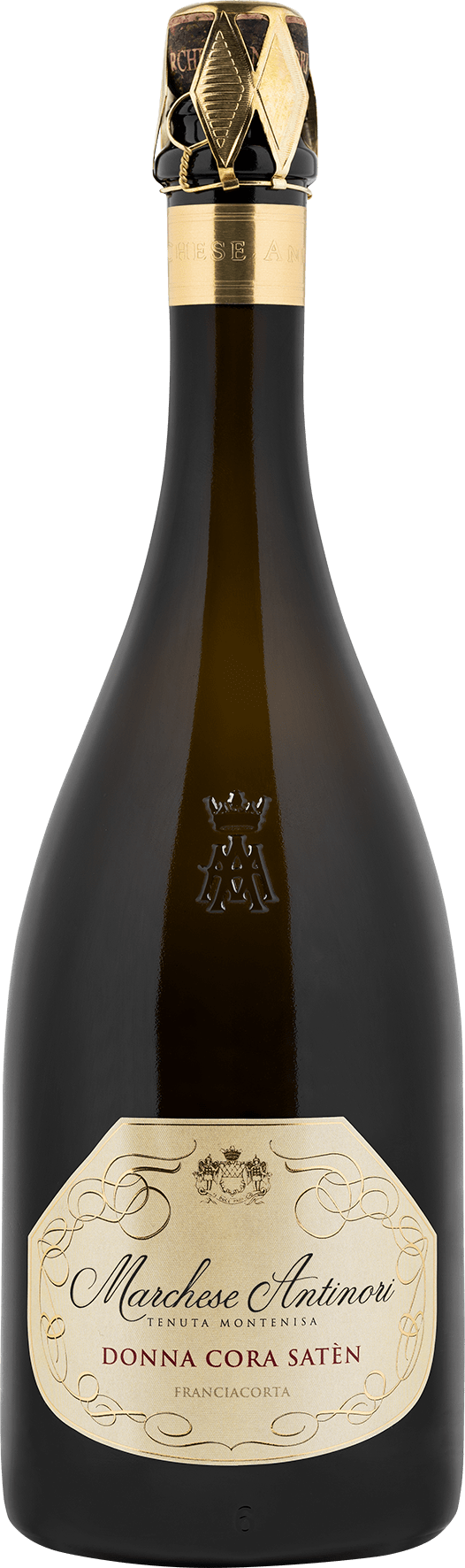
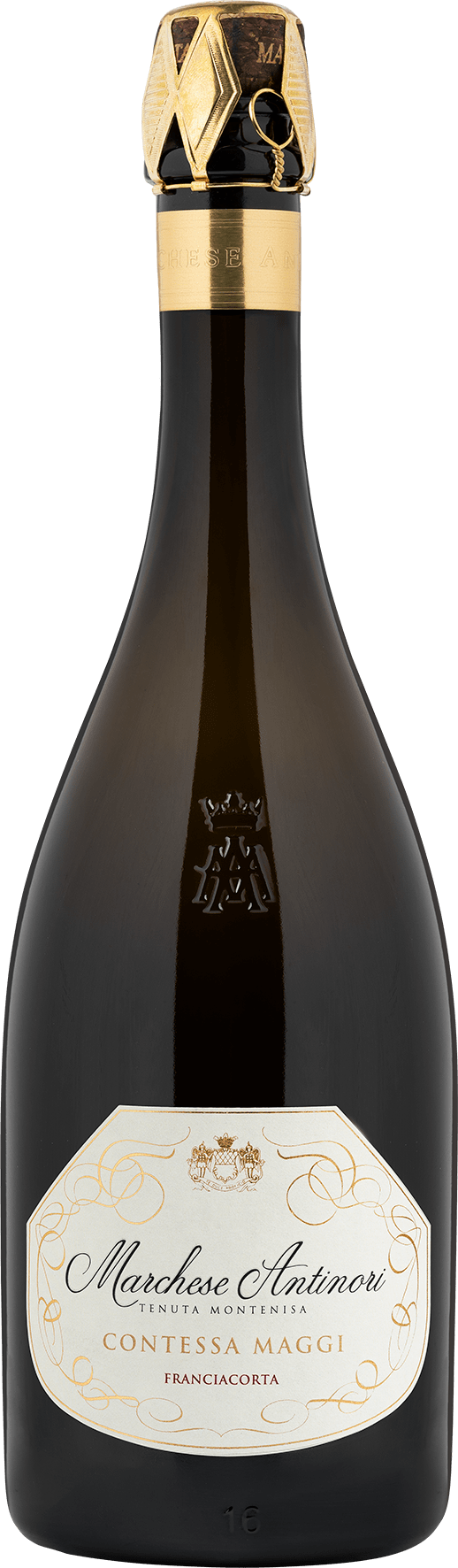
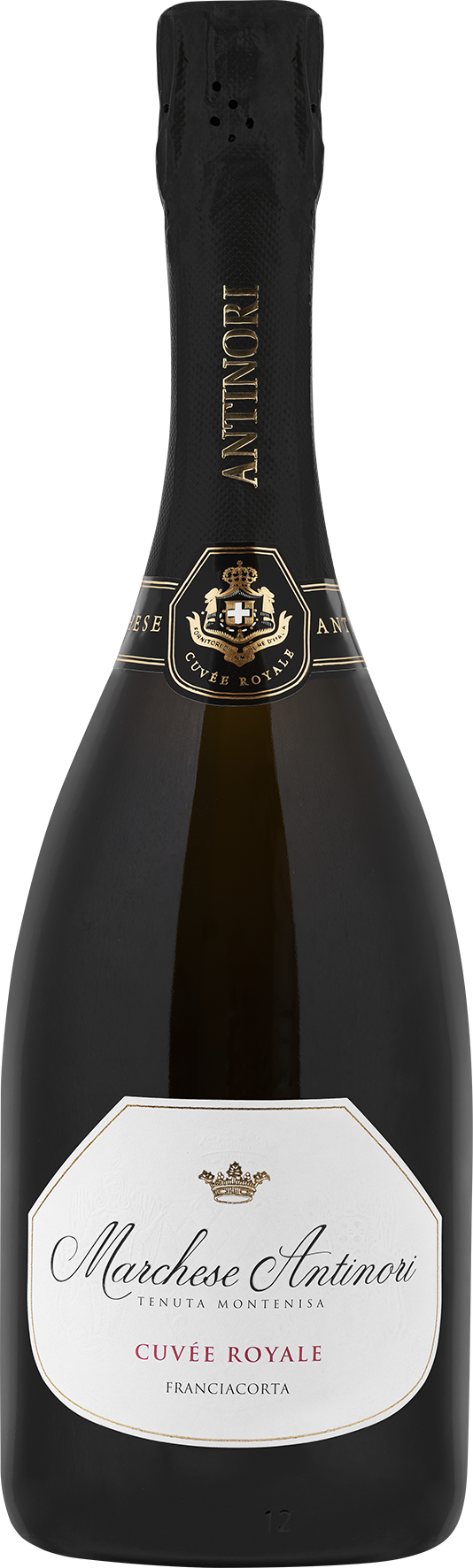
The assortment of Tenuta Montenisa is divided into two lines: the "Classics" as multi-vintage cuvées and the "Vintage" wines, which are only bottled in the best years. All Franciacorta DOCG wines are derived exclusively from the three classic grape varieties of the denomination — Chardonnay, Pinot Nero, and Pinot Bianco. The Marchese Antinori Cuvée Royale stands as the main cuvée for the characteristic style of the estate: citrus, white peach, fine pastry notes, lively perlage. The Blanc de Blancs focuses on single-varietal Chardonnay with a clearly floral, creamy-mineral orientation. With the Donna Cora Satèn millesimato, Montenisa follows the Satèn category reserved exclusively for Franciacorta: exclusively white grape varieties, fermented under lower pressure, with a particularly silky perlage and round mouthfeel. The pinnacle is the Contessa Maggi Riserva, named after the countess of the house — a prestige cuvée made from Chardonnay and Pinot Nero aged on the lees for several years, with nutty, pasty notes and a long, salty-mineral finish. All wines from this Tenuta are Franciacorta DOCG — the most demanding classification within the Lombard sparkling wine world.