Since 1605: How a Modenese family invented Black Gold
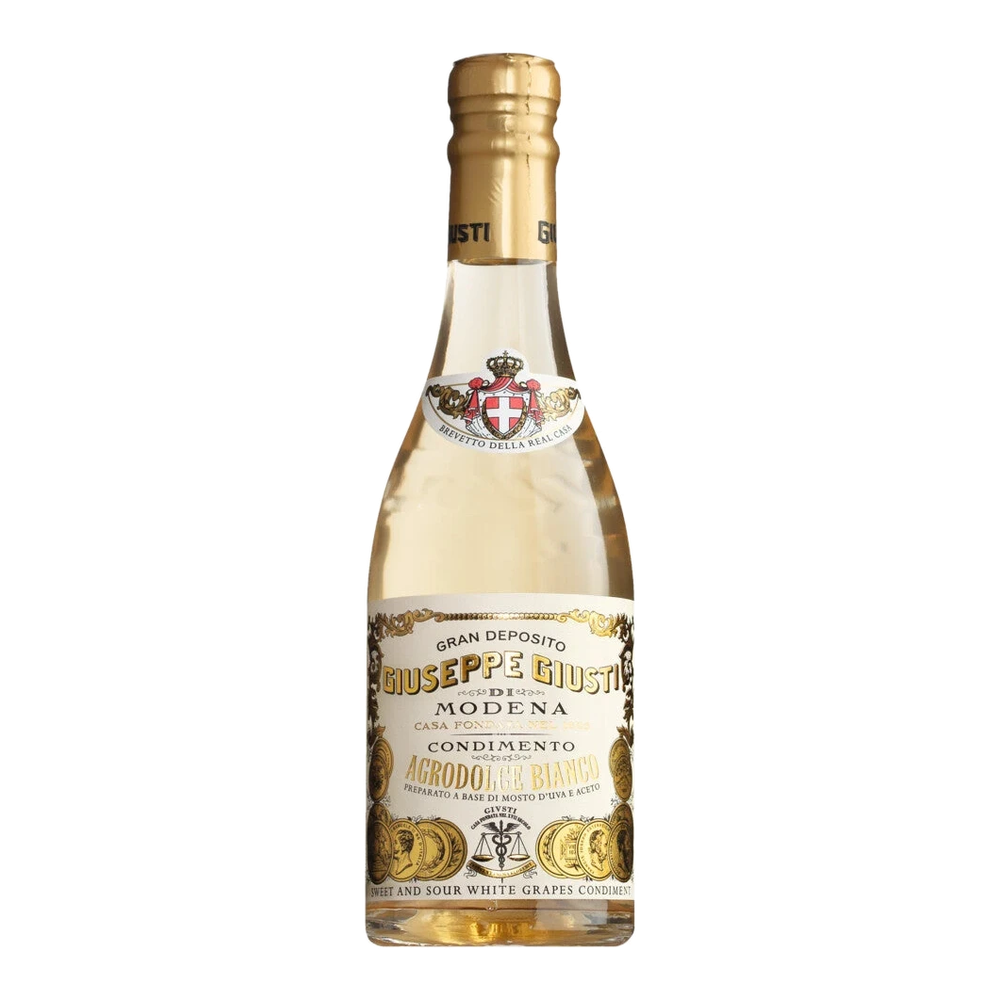
In 1605, the name Francesco Maria Giusti was recorded in the first trade register of the city of Modena — entered under the new Duke Cesare d'Este. This entry marks the documented beginning of a family history that continues uninterrupted to this day. Acetaia Giusti is thus the oldest producer of balsamic vinegar in the world, currently managed in the 17th generation by Claudio and Francesca Stefani Giusti as well as Luciano Giusti. What began as a small trading business in the heart of Modena grew into an international brand in the 19th century under Giuseppe Giusti: in 1863, he formulated the three basic rules for successful balsamic vinegar that are still valid today — grape selection, cask quality, and time. At the world exhibitions in Vienna, Paris, Antwerp, and Brussels (1873–1900), Giusti won a total of 14 gold medals; in 1929, King Vittorio Emanuele III appointed the family as the official purveyor to the Royal House of Savoy. Both awards still adorn the labels of the bottles today.
Old casks, no compromise: the craft philosophy of the Acetaia
The heart of production is a collection of around 600 historical wooden casks from the 18th and 19th centuries — the largest collection of centuries-old vinegar casks in the world that is still actively in use. The casks have never been completely emptied; this means that every new vintage meets vinegar that has been sleeping in the wood for generations. The older the cask, the more intensely it imparts wood aromas and the condensed aromas of all previous vintages. The maturation process follows the traditional "Rincalzi e Decantazione" method: the vinegar moves annually from large to ever-smaller casks of different wood types — oak, chestnut, cherry, mulberry — and concentrates step by step. For the Aceto Balsamico Tradionale DOP, the process prescribes a minimum maturation period of 12 years; the Extravecchio format matures for at least 25 years. The raw material consists exclusively of cooked grape must from Lambrusco and Trebbiano grapes from the province of Modena, without additives. The house's philosophy combines this centuries-old craft logic with the appreciation of local agriculture around Modena.
From silver to gold medal: the range at a glance
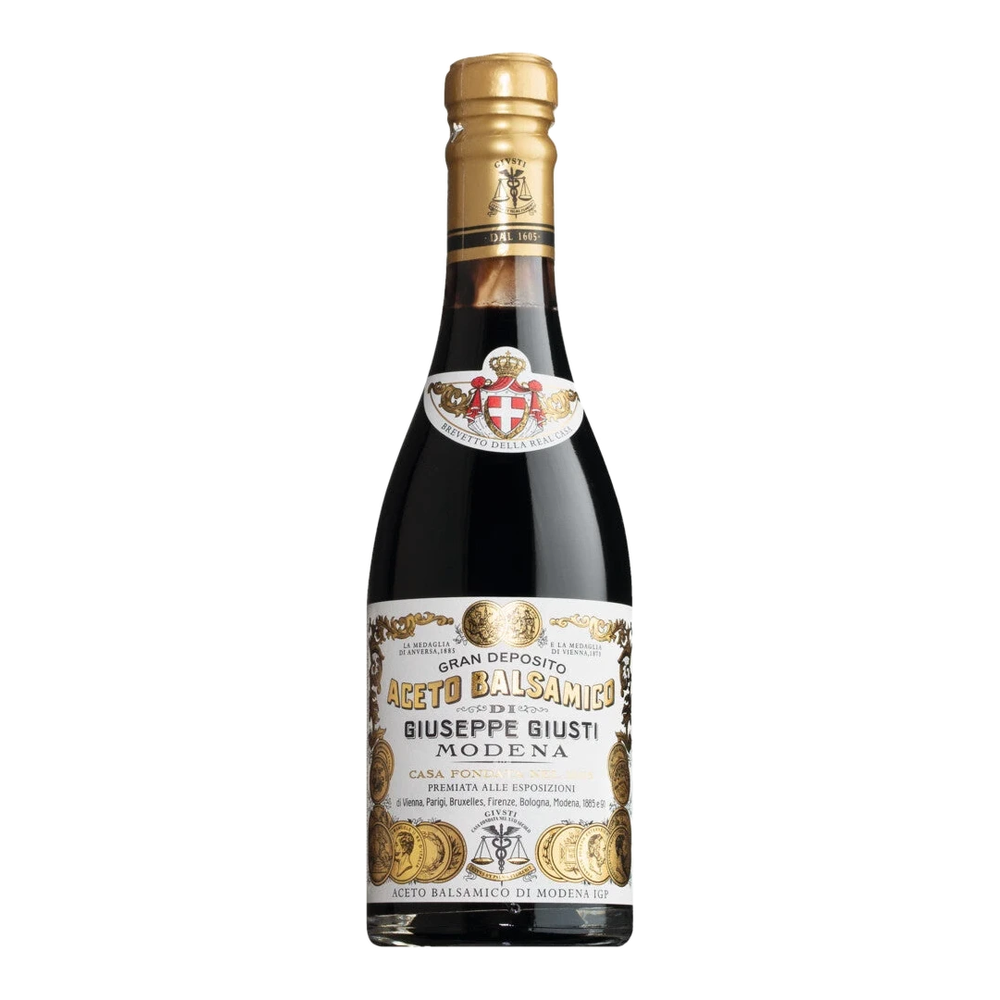
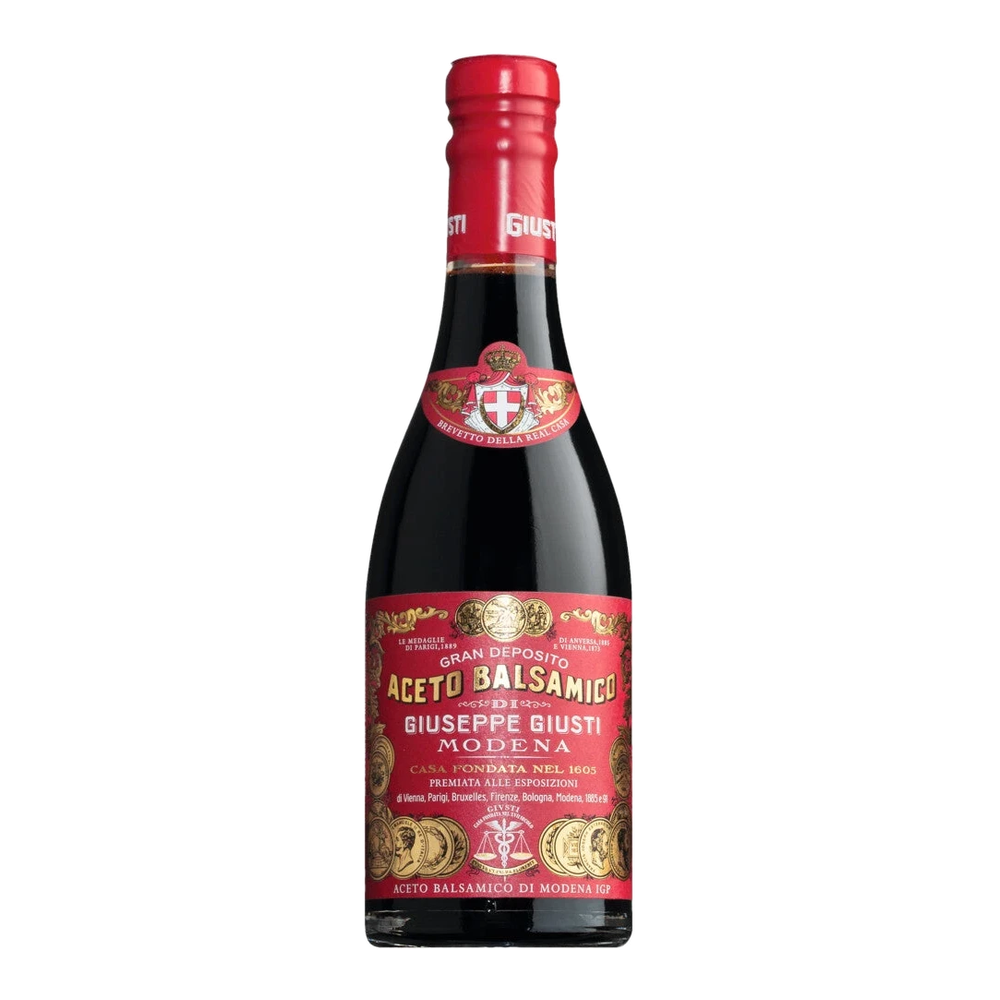
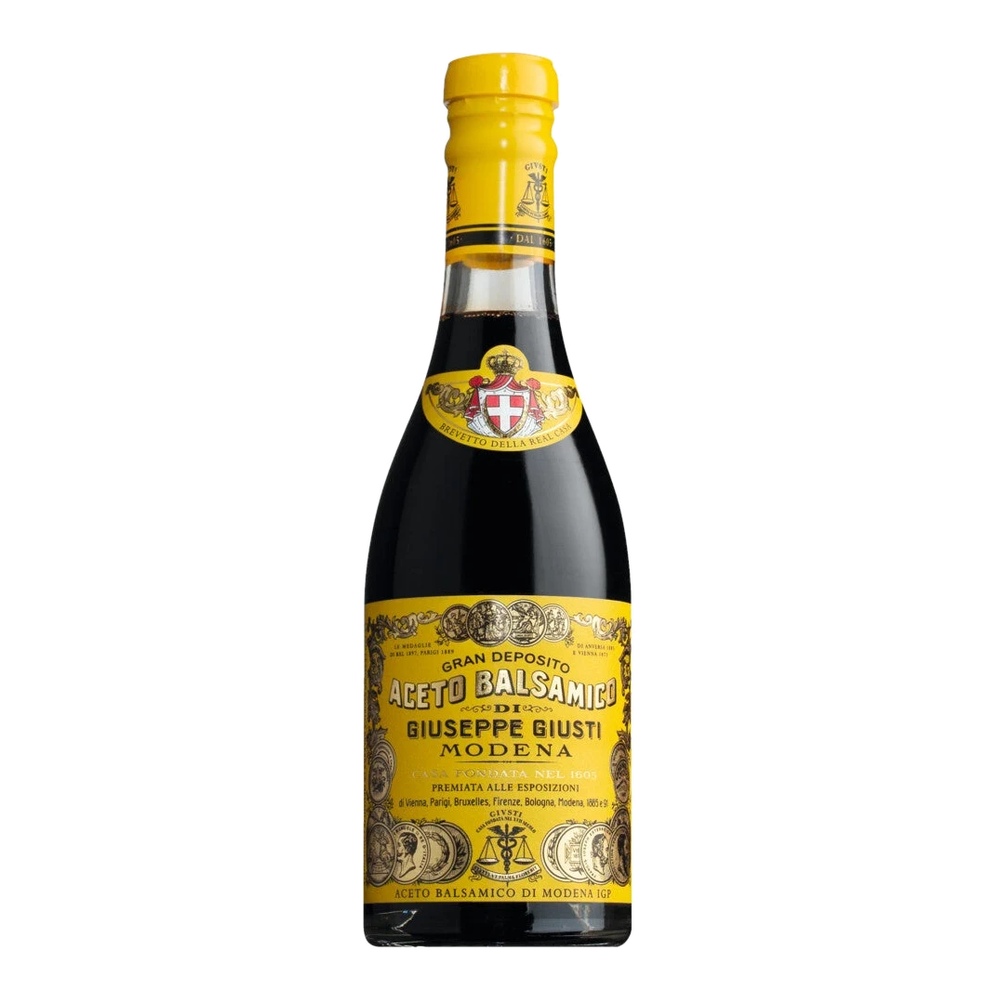
The core range from Giusti, which you can find with us, is divided according to the historical medal classification — from the 1 Medaglia d'Argento to the 5 Medaglie d'Oro. Each level stands for a different depth of maturation, density, and taste complexity: the younger qualities bring lively acidity and fruitiness, ideal for salads, carpaccio, or grilled vegetables; the higher levels develop aromas of ripe dried fruits, dark wood, and spice, which pair with Parmigiano Reggiano, seared meat, or desserts like panna cotta. The offer is complemented by the Agrodolce condiments — variants with raspberry, pomegranate, and apple — sweet-and-sour reductions that are produced on the basis of balsamic vinegar and can be used in many ways in modern cuisine: as a glaze for meat and poultry, with cheese platters, or over vanilla ice cream. All products bear the IGP seal (Indicazione Geografica Protetta), which guarantees the origin and the production process from the province of Modena.