Since 1605: How a merchant family from Modena became the oldest balsamic vinegar producer in the world
The history of Acetaia Giusti begins with an entry in a trade ledger. In 1605, Cesare d'Este, the newly crowned Duke of Modena, had the merchants of his city registered — and among the names recorded were Giuseppe and Francesco Maria Giusti, merchants in the Modenese salumeria trade. This administrative act is still considered the founding document of the oldest balsamic vinegar production in the world. For centuries, the vinegar matured in the family's attics on Via Farini in the heart of Modena, until the manufactory was moved to its own estate on the outskirts of the city in 1980 — the barrels moved with it. Since then, the estate has borne the name under which Giusti became world-famous: Gran Deposito Aceto Balsamico Giuseppe Giusti.
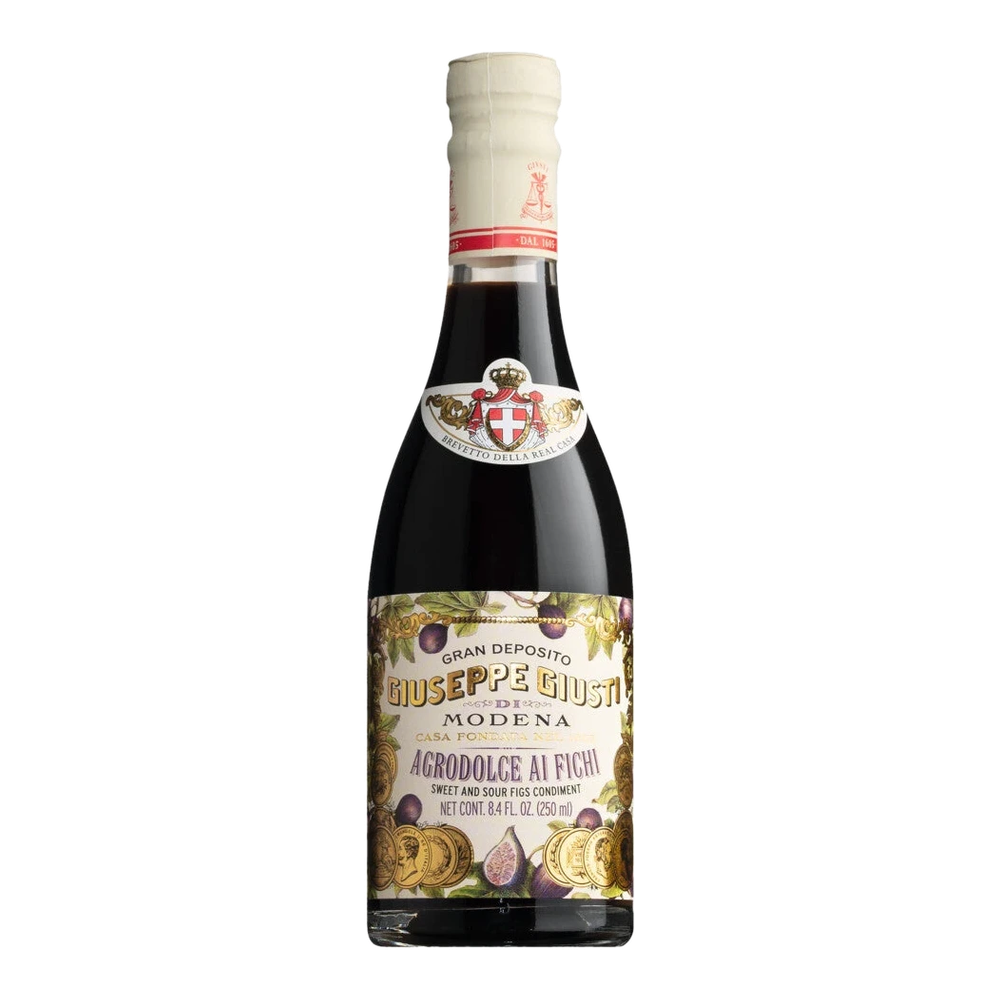
Giuseppe Giusti made the decisive leap onto the international stage in the 19th century. In 1863, he wrote down what the family had been practicing for generations: grape selection, barrel quality, and time are the three fundamental conditions for a good balsamic. He took this formula to the world exhibitions of the Belle Époque — Vienna, Paris, Antwerp, Brussels. The result: 14 gold medals, which still adorn the label of every Giusti bottle today. In 1929, King Vittorio Emanuele III appointed the family as official suppliers to the House of Savoy. Today, Claudio Stefani Giusti leads the manufactory as CEO in the 17th generation, together with his cousin Francesca.
Grapes, wood, and time: the craft behind the black gold
The heart of the production consists of around 600 barrels from the 17th, 18th, and 19th centuries. Each barrel imparts its own character as the must matures — oak, cherry wood, chestnut, mulberry, and juniper are among the types of wood used. Because the older a barrel is, the denser and more complex the wood aromas it imparts, and the finer the resulting vinegar. Every year, only a small amount of the best balsamic is taken from these century-old barrels — the so-called extraction. What remains in the barrel continues to mature. This rhythm has remained unchanged for over 400 years.
The starting material is cooked grape must from Emilia-Romagna, which is first fermented and then concentrated and refined over years in the wooden barrels. Giusti produces both the Aceto Balsamico Tradizionale di Modena DOP — with a minimum aging period of 12 years — and the Aceto Balsamico di Modena IGP in several quality levels. The result is a condiment with a deep amber color, a dense, viscous body, and a characteristic balance of sweetness and acidity that ranges from fruity and lively to complex and spicy, depending on the degree of aging.
From classic condimento to agrodolce: a range for the kitchen
Giusti does not see itself as a museum, but as a vibrant producer for contemporary cuisine. The range extends from young, lively balsamic for daily use to aged vintage bottlings and specialties such as the Agrodolce ai Fichi — a fig balsamic condiment that combines sweet depth with fruity acidity. Such products go well with aged cheese, seared poultry, or a piece of Parmigiano Reggiano, as well as with vanilla ice cream or fresh figs. The Balsamico di Modena IGP can be drizzled over raw vegetables, carpaccio, or grilled vegetables; the older DOP qualities are used pure, by the spoonful. Today, the range is sold in over 60 countries — in the company's own boutique network in Modena, Milan, Bologna, and Florence, as well as in international specialist retail.